Pro Program Live Chat +8619050185756

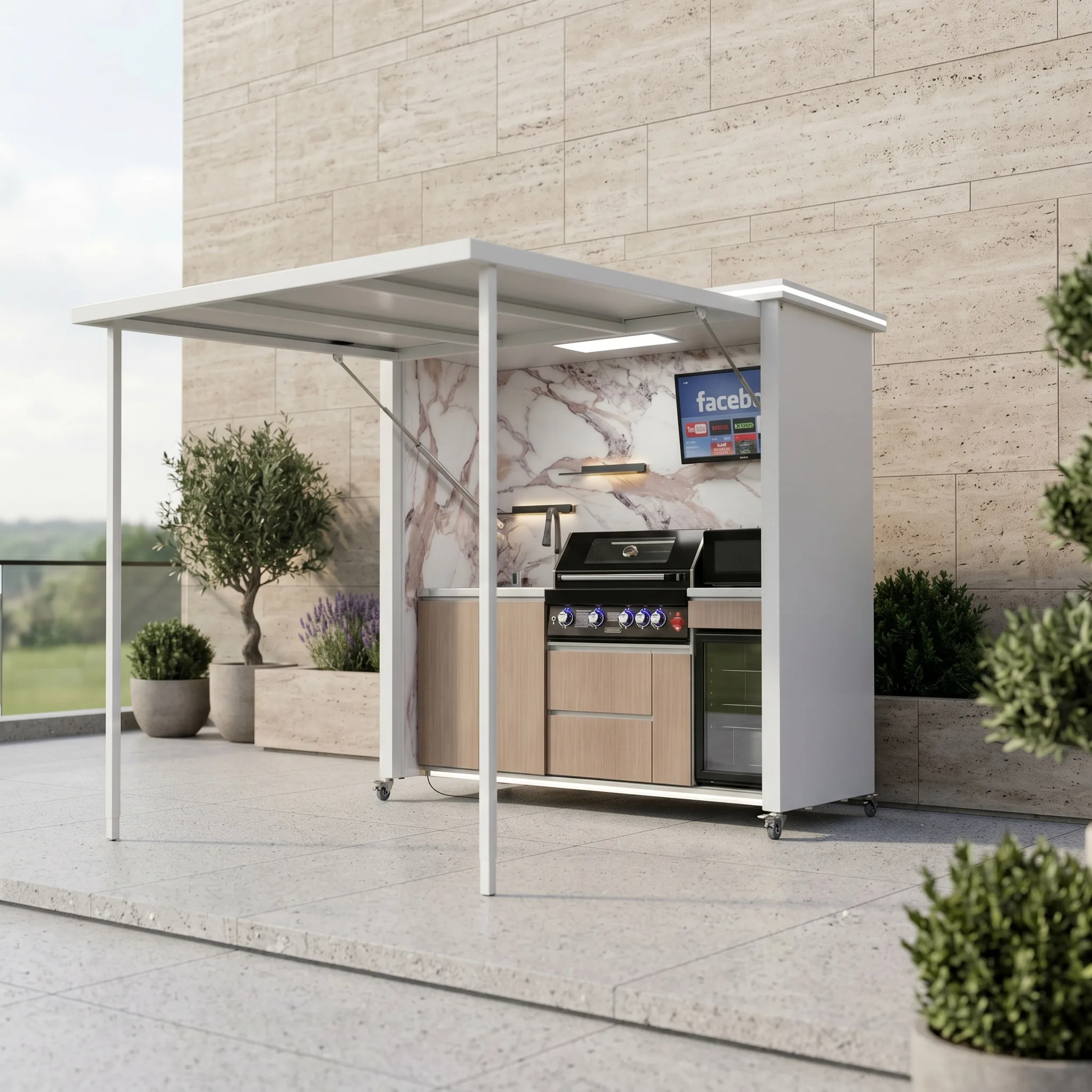
Store durable, frequently used grilling tools and outdoor-safe serving items in an outdoor kitchen, but bring in perishable food, paper products, delicate cookware, valuable electronics, and anything that can attract pests or absorb moisture. Even weather-resistant cabinets are not climate-controlled. Good storage planning protects supplies while preserving ventilation, utility access, and a safe working area.
The goal is not to move the entire indoor pantry outside. It is to keep the right tools close to the grill, reduce trips into the house, and make cleanup easier without creating moisture, food-safety, pest, or fire concerns.
Start by Dividing Storage Into Four Zones
Organize storage by the task it supports rather than filling whichever cabinet is closest. Four practical zones are cooking, preparation, serving, and cleanup.
- Cooking zone: grill tools, heat-resistant gloves, thermometers, and manufacturer-approved accessories.
- Preparation zone: cutting boards, mixing bowls, trays, and frequently used utensils.
- Serving zone: durable plates, cups, trays, and beverage accessories.
- Cleanup zone: approved cleaners, brushes, towels in use, trash supplies, and sink accessories.
Keep the cooking zone near the grill without placing items where heat, flame, grease, or required appliance clearances make storage unsafe. The cleanup zone should be convenient to the sink and trash but separated from food-contact items.
What Usually Works Well in Outdoor Cabinets
Durable tools that tolerate normal outdoor temperature changes are the best candidates. Stainless-steel tongs, spatulas, grill baskets, skewers, sturdy trays, and manufacturer-approved appliance accessories are common examples. Store clean items only after they are completely dry.
Use shallow drawers for hand tools so they remain visible. Deep drawers can hold bowls, larger trays, or protective covers. Dividers prevent tools from sliding into each other when drawers open, especially in a kitchen with casters or a patio that is not perfectly level.
Inspect stored metal periodically for surface changes, loose handles, or contamination. Coastal air, pool chemicals, fertilizer dust, irrigation, and cleaners can affect materials differently. “Stainless” does not mean immune to every exposure.
What Should Usually Come Back Indoors
Paper towels, napkins, cardboard packaging, cookbooks, and paper plates readily absorb humidity and attract insects. Fabric linens can become damp or develop odors. Wood utensils and cutting boards may swell, crack, or support mold when repeatedly exposed to uncontrolled moisture.
Valuable knives, small electronics, batteries, chargers, and delicate appliances are generally better stored indoors unless their documentation specifically approves the outdoor environment. Also bring in medicines, pet food, seeds, fertilizer, and chemicals that do not belong near food preparation.
At the end of a gathering, remove leftovers and perishable ingredients. Outdoor cabinets are not a substitute for refrigeration, and a refrigerator should not become long-term forgotten storage.
Food Storage Requires Temperature Control
The USDA Food Safety and Inspection Service advises maintaining a refrigerator at 40°F or below and recommends using an appliance thermometer to verify temperature. Review the USDA’s refrigeration and food-safety guidance when planning outdoor meal service.
Outdoor temperatures can be demanding, so use only refrigeration approved for the actual installation and ambient conditions. Follow the appliance’s ventilation clearances, operating-temperature limits, winter instructions, and maintenance requirements. Do not block the toe kick or cabinet vents to create extra storage.
Keep raw meat, poultry, and seafood sealed and separated from ready-to-eat food. Remove food promptly when power is lost or safe temperature cannot be confirmed. An outdoor refrigerator is convenient, but it still requires the same food-safety discipline as the refrigerator indoors.
Do Not Store Propane in an Ordinary Cabinet
A propane cylinder requires an approved arrangement based on the appliance instructions and applicable requirements. Never assume that an empty-looking cabinet is safe cylinder storage. Enclosure ventilation, securing, regulator and hose routing, ignition sources, heat, access, and cylinder condition all matter.
Spare cylinders, gasoline, lighter fluid, paint, solvents, and other flammable products should not be casually stored inside the outdoor kitchen. Ask qualified professionals and follow product documentation for fuel storage and connections.
Keep Appliance Ventilation Clear
Refrigerators, ice makers, grills, gas components, electronics, and powered systems may rely on openings in cabinet walls, doors, toe kicks, or rear panels. Storage bins, towels, foil, and cleaning supplies can unintentionally block airflow.
Mark no-storage areas inside cabinets so every household member understands them. Maintain access to shutoff valves, electrical disconnects, plugs, plumbing traps, filters, drains, and service panels. A cabinet that looks available may actually be required for safe operation or future maintenance.
Plan Cleaning-Supply Storage Carefully
Use only cleaners appropriate for the verified cabinet, countertop, appliance, and finish materials. Keep products in their original labeled containers and separate them from food, utensils, and serving pieces. Do not combine chemicals or transfer them into beverage bottles.
A small removable caddy is often more practical than leaving a full collection of cleaners outdoors. It can be carried inside between uses, reducing temperature exposure and accidental access by children or pets.
Do not store pool chemicals, pesticides, fertilizer, automotive products, or fuel in an outdoor kitchen. Vapors, spills, contamination, and material reactions make the food-preparation area the wrong location.
Control Moisture Without Sealing the Cabinets
Water can enter through wind-driven rain, wet tools, condensation, plumbing leaks, irrigation, or cleaning. Wipe items dry before storage and inspect cabinets after storms. Keep drain paths open and correct leaks rather than relying on absorbent liners that conceal moisture.
Airtight household bins are not always the best answer. They can trap moisture already inside and may block cabinet ventilation. Choose organizers that suit the cabinet design and preserve required airflow. If using shelf liners, make sure they can be removed and cleaned.
Pest-Resistant Storage Practices
Crumbs, grease, sweet drink residue, pet food, and unsealed trash attract pests. Clean the grill and counters, empty trash after gatherings, rinse beverage spills, and avoid storing open food packages outside.
Inspect door seals, cabinet gaps, and utility penetrations while preserving required ventilation. Do not close appliance or gas vents with mesh, foam, or sealant unless the manufacturer explicitly approves the modification.
Drawers, Doors, and Pull-Outs Compared
| Storage type | Best use | Planning concern |
|---|---|---|
| Shallow drawer | Tongs, thermometers, small utensils | Keep away from high-heat zones |
| Deep drawer | Bowls, trays, cookware | Heavy items need suitable slides and load limits |
| Door cabinet | Large dry serving items | Items can hide vents and service components |
| Trash pull-out | Waste during cooking | Empty and clean after each gathering |
| Open shelf | Items used during an event | Offers little protection from dust, wind, or pests |
Seasonal Storage and Shutdown
At the end of the primary cooking season, remove food, paper, fabrics, batteries, valuables, and products sensitive to temperature. Clean and dry cabinets, inspect seals and hardware, and follow the appliance instructions for winterization or extended shutdown.
Plumbing may require professional isolation and draining in freeze-prone climates. Refrigeration instructions may differ by model and climate; do not unplug, cover, or close an appliance without checking its documentation. Gas, electrical, plumbing, and fire-safety work should be completed by appropriately qualified professionals.
Outdoor Kitchen Storage Checklist
- Place grill tools near the cooking zone but outside heat clearances.
- Store only clean and completely dry items.
- Bring paper, linens, wood tools, and valuable knives indoors.
- Keep perishable food under verified safe refrigeration.
- Use an appliance thermometer in the refrigerator.
- Do not block vents, shutoffs, plugs, drains, or service panels.
- Keep cleaners labeled and separated from food-contact items.
- Never use an ordinary cabinet for unapproved propane storage.
- Empty trash and remove food residue after each event.
- Inspect for moisture, corrosion, insects, and rodents regularly.
- Remove sensitive items before severe weather or seasonal shutdown.
- Follow model-specific appliance and cabinet instructions.
When comparing storage arrangements, review the Yuquanqiu outdoor kitchen collection and request a dimensioned cabinet and appliance plan for the exact configuration. Count usable drawers and shelves only after subtracting utility, ventilation, and service zones.
Frequently Asked Questions
Can I leave grilling tools outside all year?
Durable tools may be suitable for outdoor cabinet storage, but climate, moisture, salt, and tool materials matter. Store them clean and dry, inspect them regularly, and bring sensitive or valuable tools indoors.
Can I store dishes in an outdoor kitchen?
Durable, washable dishes may be practical if cabinets remain clean and pest-free. Wash items before use when dust, insects, or moisture may have reached them. Bring delicate dishes indoors.
Can dry food stay in an outdoor cabinet?
It is generally better to bring food indoors. Heat, humidity, pests, and damaged packaging make outdoor cabinetry a poor pantry substitute.
What temperature should an outdoor refrigerator maintain?
USDA guidance says a refrigerator should maintain 40°F or below. Verify temperature with an appliance thermometer and follow the refrigerator’s documented ambient operating limits.
Can cleaning products stay under the outdoor sink?
Only products suitable for the temperature and location should be considered. Keep them labeled, separated from food items, protected from children and pets, and away from electrical or gas components. A removable caddy is often safer.
Should cabinets be completely sealed against rain?
Not necessarily. Some cabinets and appliances require ventilation. Use the product’s weather-protection design and keep specified vents open rather than adding unapproved seals.
Store Less, but Store It Better
The most useful outdoor kitchen keeps essential tools close without turning cabinets into an uncontrolled pantry, chemical closet, or fuel locker. Organize by task, protect food, preserve ventilation and service access, remove moisture and waste, and bring sensitive items indoors. That approach keeps the cooking area easier to use and simpler to maintain.