Pro Program Live Chat +8619050185756

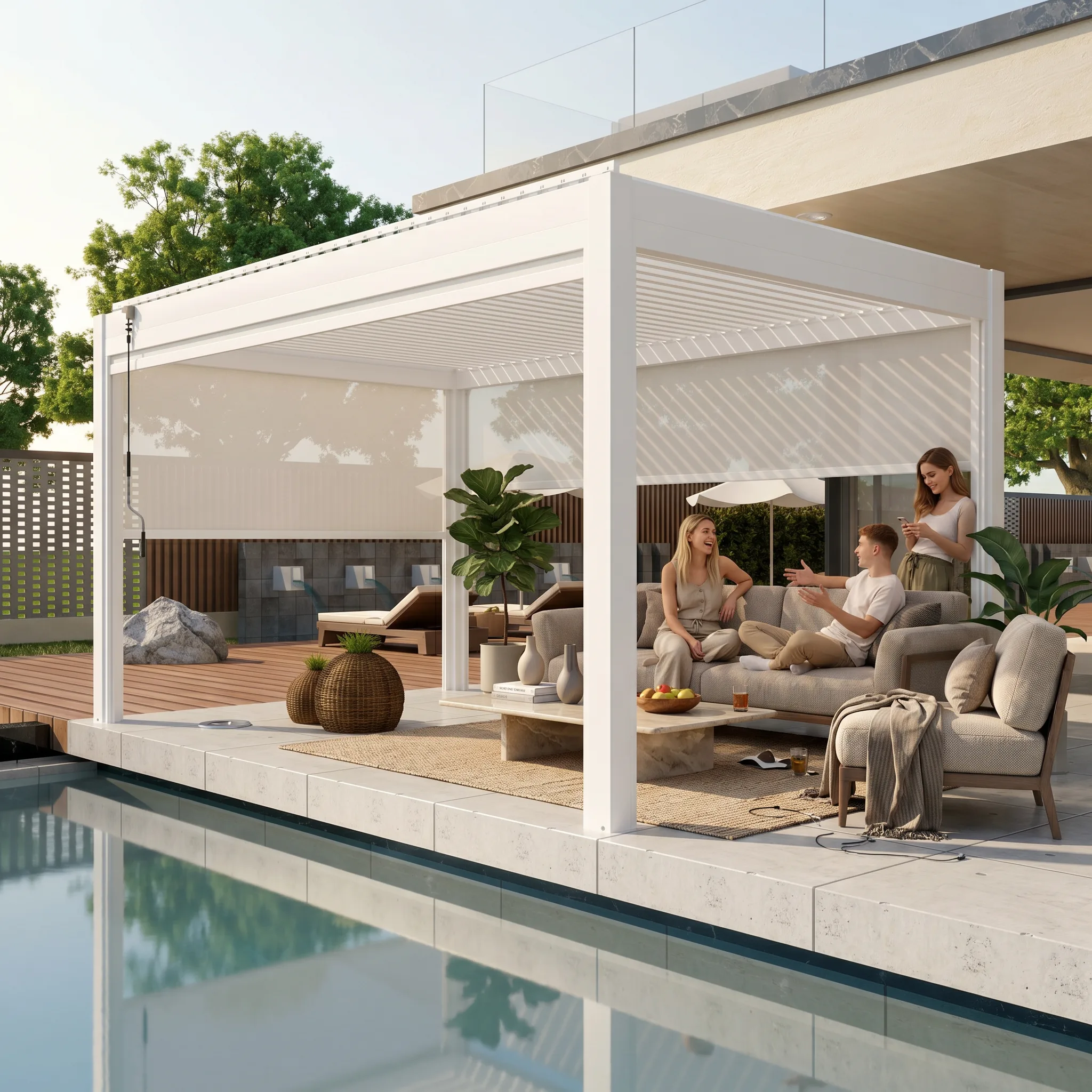
For most U.S. homeowners, retractable pergola screens are the best all-around side-shade option when they want adjustable privacy, sun control, and a clean architectural appearance. Outdoor curtains are usually the simpler decorative choice, fixed panels provide permanent screening, and landscaping creates a softer boundary but takes more space and time. The right answer depends on which direction the sun and wind arrive, how close the neighbors are, how often the space is used, and whether the pergola structure is designed to accept the selected accessory.
Start With the Problem You Actually Need to Solve
“More privacy” can mean several different things. One homeowner may want to block a direct view from a neighboring second-story window. Another may need relief from low western sun during dinner. A poolside lounge may need visual separation without losing airflow, while a dining area may need protection from light wind and drifting leaves.
Before choosing a side enclosure, stand inside the planned seating area at the times when you expect to use it. Note the viewing angles, sun path, prevailing breeze, nearby doors, grill position, pool edge, and walking routes. A solution installed on every side can make an open pergola feel unnecessarily enclosed. In many yards, treating only one or two elevations provides better comfort while preserving the outdoor character.
Four Common Pergola Side-Shade Options
Retractable Screens
Retractable screens move vertically or horizontally and can disappear into a cassette or housing when not needed. Depending on the selected fabric or mesh, they can reduce glare, soften wind, limit outside views, and maintain partial visibility from inside. Their greatest advantage is control: the pergola can remain open in comfortable weather and become more sheltered when conditions change.
Integrated screen systems also create a tailored look because tracks, housings, and finishes can coordinate with the pergola frame. However, compatibility must be confirmed for the exact pergola model. Track locations, post dimensions, drainage paths, motors, controls, electrical requirements, and safe operating limits all matter. Screens should be raised when weather exceeds the manufacturer’s documented operating conditions.
Outdoor Curtains
Outdoor curtains add softness and movement to a structure dominated by straight lines and metal surfaces. They are useful for occasional privacy and decorative layering, and individual panels can often be tied back when the space is open. Curtains may also be easier to replace when a homeowner wants a new color.
The tradeoffs are movement, cleaning, and less precise coverage. Fabric can blow into furniture or circulation paths, collect moisture and pollen, and show wear at tiebacks or hems. Select fabric specifically intended for exterior exposure, provide enough clearance from heat sources, and plan a way to remove or secure panels during severe weather.
Fixed Slats or Decorative Panels
Fixed aluminum slats, screens, or architectural panels create dependable privacy without daily operation. They can be especially effective along a property-facing side, behind an outdoor kitchen, or where a mechanical enclosure needs visual screening. Angled slats can limit sightlines while allowing some air movement.
Because fixed panels change the way wind acts on a structure, they should never be treated as purely decorative add-ons. Confirm that the pergola manufacturer permits them, that attachment points are appropriate, and that the complete assembly is reviewed for site conditions. A qualified local professional should determine structural, anchoring, setback, and permit requirements.
Planting and Living Screens
Hedges, ornamental grasses, espaliered plants, and freestanding planters can create a natural privacy layer around a pergola. Landscaping softens hard surfaces and may improve the view from both the pergola and the house. It can also be arranged to screen a specific angle rather than closing an entire side.
Living screens require adequate soil volume, irrigation, drainage, plant spacing, and long-term maintenance. Mature size matters: a plant that looks appropriately scaled at installation can later restrict circulation or contact the roof and drainage components. Choose species based on local climate and consult a landscape professional when roots, pool decking, utilities, or property boundaries are involved.
Quick Comparison
| Option | Best for | Adjustability | Typical maintenance |
|---|---|---|---|
| Retractable screen | Privacy, glare control, and a streamlined look | High | Clean fabric and tracks; inspect operation |
| Outdoor curtain | Decorative softness and occasional privacy | Medium | Wash, dry, secure, and store as needed |
| Fixed panel or slats | Permanent screening on a selected side | Low | Wash surfaces; inspect connections |
| Living screen | Natural separation and landscape integration | Low after planting | Water, prune, fertilize, and manage growth |
How Much Visibility Should a Screen Block?
Total opacity is not always the most comfortable choice. A dense screen can provide privacy but may reduce daylight, views, and cross-ventilation. A more open mesh can soften sightlines and glare without making the area feel like an indoor room. The result also changes with lighting: a material that appears private during daylight may reveal silhouettes at night when the pergola is illuminated.
Ask to see a physical sample from both sides in sunlight and after dark. Consider the contrast between the screen color and the background. Darker mesh often preserves outward views more effectively, while lighter material may blend with a light-colored pergola. Performance varies by the exact fabric, so use the manufacturer’s documented openness, light-control, and care information rather than relying on color alone.
Plan Each Side Independently
A thoughtful pergola enclosure rarely needs identical treatment on all four sides. The west side may need solar control, the neighbor-facing side may need privacy, and the garden side may be best left open. Around a pool, maintain code-required barriers and clear access; a pergola screen is not automatically a substitute for a compliant pool fence or gate.
Doors, stairs, service routes, furniture, and emergency egress must remain usable. If the pergola is near an outdoor kitchen, keep curtains and screens away from grills, burners, heaters, vents, and hot surfaces. Appliance documentation and required fire clearances control, and a qualified professional should review the final layout.
Buyer Checklist Before Ordering
- Identify the exact privacy, sun, glare, or wind problem on each side.
- Measure finished openings only after confirming the pergola dimensions and installation tolerances.
- Verify that the accessory is approved for the specific pergola model.
- Review track, cassette, fastener, drainage, and electrical details.
- Confirm safe operating conditions and the procedure for high winds or storms.
- Check fabric cleaning instructions and replacement availability.
- Keep controls accessible but protected from unintended operation.
- Preserve walking paths, door swings, pool access, and appliance clearances.
- Ask local authorities or qualified professionals about structural and permit requirements.
Should Screens Be Ordered With the Pergola?
If integrated retractable screens are a priority, planning them with the pergola is usually more straightforward than adding them later. Early coordination allows the designer to account for housings, guides, wiring, controls, finished opening sizes, and drainage. It also makes it easier to coordinate colors and minimize visible retrofit hardware.
A later addition may still be possible, but “fits between the posts” is not enough. The pergola must have suitable attachment locations, adequate clearances, and a compatible structural design. Request model-specific documentation before purchasing either component. You can review Meta Lifestyle’s outdoor pergola collection as a starting point, then confirm screen compatibility and configuration for the exact model under consideration.
Frequently Asked Questions
Do pergola screens stop rain?
Some screens may reduce wind-driven mist or light rain, but they should not automatically be treated as waterproof walls. Performance depends on material, tracks, gaps, wind direction, and the manufacturer’s documentation. The pergola roof and drainage system remain the primary overhead weather-management components.
Are retractable screens good for wind?
They can make light breezes feel more comfortable, but every system has operating limits. Screens increase the surface area exposed to wind and may need to be retracted before storms. Follow the model-specific instructions rather than assuming a universal wind rating.
Can I add curtains to an aluminum pergola?
Often yes, provided the curtain track or rod uses manufacturer-approved attachment locations and does not interfere with louvers, gutters, lights, screens, or drainage. Do not drill structural members without written guidance for the exact model.
Which option offers the most privacy at night?
A dense screen or fixed panel generally blocks views better than open mesh, but nighttime lighting can change visibility dramatically. Test material samples with the pergola lights on and the surrounding yard dark before making a final selection.
Can screens be installed on only one side?
Yes, and a single strategically chosen side is often enough. Treating the problem elevation can preserve views and airflow while controlling low sun or a direct neighbor sightline.
Do pergola screens require permits?
Requirements vary by jurisdiction, attachment method, structure, electrical work, and project scope. Ask the local authority and use qualified professionals for structural anchoring, wiring, code, and permit decisions.
The Practical Choice
Choose retractable screens when flexible comfort and a coordinated architectural appearance matter most. Choose curtains for softness and occasional use, fixed panels for permanent screening, and planting for a natural boundary. The best design often combines two approaches—for example, one retractable solar screen with landscape screening along the property line. Plan around real sightlines and sun angles, verify compatibility with the exact pergola, and let model-specific documentation and qualified local professionals control structural, electrical, anchoring, and permit decisions.