Pro Program Live Chat +8619050185756

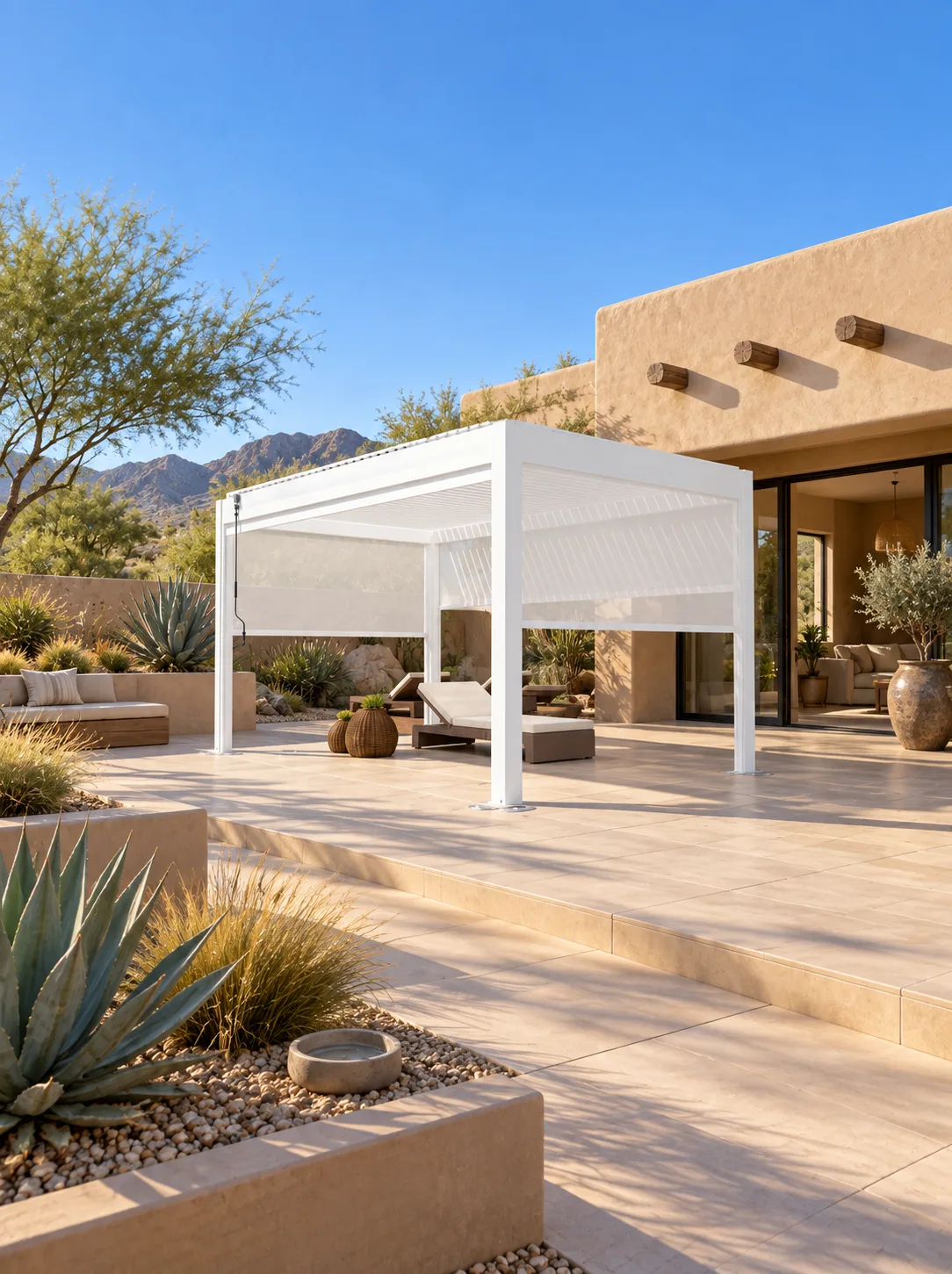
A pet-friendly patio under a motorized pergola should provide adjustable shade, a comfortable walking surface, fresh water, a secure boundary, and a clear path between the house and yard. Place beds and bowls where they stay out of circulation, keep cords and controls inaccessible, and choose finishes that are easy to clean without becoming dangerously hot or slippery. The pergola can improve comfort, but it does not make an outdoor area automatically safe in extreme heat, storms, or unattended use.
For many U.S. households, the backyard is shared by people and pets every day. Planning for a dog or cat from the beginning can produce a cleaner, calmer outdoor room than adding gates, bowls, and shade patches later. The goal is not to turn a luxury patio into a kennel. It is to integrate practical pet needs into the same measured layout, durable material palette, and uncluttered design that serves the rest of the family.
Begin with your pet’s real outdoor habits
Before choosing furniture or accessories, observe how your pet uses the existing yard. Does a dog follow the shade throughout the afternoon, patrol the fence, dig near planting beds, or sprint from the back door? Does an older pet need a level route without steps? Is a water bowl frequently tipped over? Does a cat climb nearby walls or furniture?
Make a simple plan showing the house door, proposed pergola footprint, gates, fence, pool, planting, outdoor kitchen, and the pet’s usual travel paths. Preserve a direct route rather than forcing the animal between chair legs or close to a grill. A well-defined circulation lane also benefits guests carrying food and reduces accidental collisions during entertaining.
Use adjustable shade as one layer of comfort
A motorized louvered roof can help manage direct sun over a seating zone. The useful setting may change with season and time of day, so assess morning and afternoon exposure instead of assuming one fixed position will work. Side screens may help with low-angle sun on a suitable product, but their exact use should follow model-specific documentation.
Shade alone does not eliminate heat risk. Air temperature, humidity, reflected heat from walls, and stored heat in paving can remain high. Pets must have water and an easy route indoors, and they should never be left outside simply because the pergola is providing shade. Follow veterinary guidance for your animal, especially for senior pets, flat-faced breeds, puppies, and animals with medical conditions.
Test the surface at pet level
People experience a patio several feet above the paving and usually wear shoes; pets are much closer to the surface and contact it directly. Compare candidate materials in sun and shade, considering color, thermal behavior, texture, and local climate. A dark surface may absorb more solar heat, while an extremely smooth finish can become slippery when wet.
Ask the hardscape supplier for verified product information and maintenance guidance. Samples tested at the actual site can be more informative than a showroom display. Rugs may provide a softer zone, but select outdoor-rated products that dry appropriately, resist movement, and do not create curled edges or chewing hazards.
Create a stable water and rest station
Place a water bowl on a level, washable surface outside the main walkway. It should remain easy for the pet to reach even when furniture is moved for guests. Avoid placing it beside electrical connections, cooking equipment, or a door where spilled water can create a slip hazard.
A raised or recessed bowl holder can reduce tipping, provided its height suits the animal and it can be cleaned. A washable bed or platform can define a resting place. Give the pet a view of family activity without placing the bed against a motorized screen path, beneath moving components, or where chairs will be pulled back.
Keep boundaries independent from the pergola
Do not assume pergola posts or retractable screens form a pet enclosure. A screen designed for shade or insects may not be intended to resist pushing, scratching, climbing, or impact. Use a secure fence or gate system appropriate to the animal and property, and verify that openings, latches, and bottom gaps are suitable.
Maintain access to required exits and do not attach a gate, leash, tether, or pet barrier to the pergola unless the manufacturer specifically approves that use. Added loads and impacts can be unpredictable. Structural components, anchoring, accessories, and permitted attachments must follow verified model documentation.
Separate pets from cooking and fire zones
If the pergola is near an outdoor kitchen, create a circulation boundary around hot grills, burners, grease, sharp utensils, and food preparation. A visual change in paving or furniture placement can help people understand the work zone, but active supervision or a proper barrier may still be necessary for pets.
Do not position a pet bed where smoke, heat, or grease travels. Gas, electricity, plumbing, fire clearances, ventilation, and equipment placement must be determined by the appliance documentation and qualified local professionals or authorities. The pergola layout should be coordinated with those requirements rather than used to override them.
Choose durable, maintainable patio elements
Premium design and pet practicality can coexist when materials are chosen deliberately. Look for furniture fabrics with documented outdoor use and cleaning instructions. Prefer stable tables without fragile objects at tail height. Select planters that cannot tip easily and confirm every plant’s suitability for your household with a reliable veterinary or horticultural resource; common ornamental plants can be harmful if chewed.
Store food, chemicals, fertilizers, pest-control products, and grill supplies in secure locations. Route irrigation so it does not keep the pet zone wet. If an outdoor drain is present, use covers suited to the site and keep them clear of hair, leaves, and debris.
Pet-friendly pergola planning comparison
| Decision | Better planning approach | Common problem to avoid |
|---|---|---|
| Resting area | Shaded, ventilated, washable, and near family activity | Bed placed in a doorway or moving screen path |
| Walking surface | Site-tested for heat, traction, drainage, and cleaning | Choosing by appearance without checking sun exposure |
| Water | Stable bowl on a level surface away from utilities | Spill zone beside outlets or main circulation |
| Boundary | Purpose-designed fence and gate independent of the pergola | Treating shade screens as pet containment |
| Plants | Verified pet-appropriate species in stable containers | Assuming every ornamental plant is harmless |
| Controls | Protected location accessible to responsible adults | Loose cables, chewable cords, or reachable remotes |
| Cooking | Defined separation and active supervision | Pet route crossing the hot work zone |
Protect motors, wiring, and controls
Motorized louvers, lighting, sensors, outlets, and optional screens require coordinated electrical planning. Keep controls where a pet cannot chew, knock, or activate them. Do not run temporary extension cords across the patio as a permanent solution. A licensed electrician should perform required electrical work according to the selected system documentation and local rules.
Before operating the roof or screens, check that pets, toys, leashes, branches, and furniture are clear of all moving areas. Teach household members to look first rather than assuming a sensor will detect every obstruction. If unusual noise, resistance, or damage appears, stop operation and follow the manufacturer’s service guidance.
A practical pre-order checklist
- Map the pet’s route from the house to the yard.
- Photograph morning and afternoon shade conditions.
- Test paving samples for surface temperature and traction.
- Reserve a level water station outside the walkway.
- Confirm a secure, independent fence and gate plan.
- Keep the cooking zone separate from the pet route.
- Check proposed plants against reliable pet-safety guidance.
- Plan protected electrical service with a qualified professional.
- Keep every moving louver or screen path clear.
- Provide an unrestricted route back indoors.
Discuss the household, not just the dimensions
When requesting a pergola quote, share the patio dimensions and supporting-surface information, but also explain that pets use the space. Identify the primary activity zone, furniture, gates, cooking equipment, desired screens or lighting, and any accessibility needs. That context helps the design conversation focus on usable space rather than a rectangle that merely fits on a plan.
Review META LIFESTYLE shade structures and submit your site information through the Request a Quote page. Both +8619050185756 and +1 (626) 735-5685 are official META LIFESTYLE WhatsApp contacts. Include a measured patio sketch and photographs so product questions can be discussed in relation to the real setting.
Frequently Asked Questions
Can a pergola keep my dog cool all day?
No outdoor shade structure can guarantee safe temperatures all day. Sun angle, air temperature, humidity, wind, reflected heat, and paving temperature all matter. Provide water and indoor access, supervise the animal, and follow veterinary heat-safety guidance.
Are motorized pergola screens safe to use as dog gates?
Do not treat a shade or insect screen as pet containment unless verified product documentation explicitly permits that use. Use a purpose-designed fence or gate appropriate to the animal and site.
What patio color is best for pets?
Color can influence solar heat absorption, but material composition, finish, exposure, and climate also matter. Compare documented products and test samples at the site. Traction and cleanability deserve equal attention.
Can I attach a dog leash to a pergola post?
Do not attach a leash or tether to the pergola without explicit manufacturer approval. Animal movement can create sudden and unpredictable loads, and tethering introduces entanglement and welfare concerns.
Where should the pet bed go under a pergola?
Choose a shaded, ventilated spot with a clear view of household activity. Keep it away from doors, grills, heaters, electrical equipment, drainage paths, and all moving roof or screen components.
Do pets need to be indoors during pergola operation?
Follow the selected product’s instructions. At minimum, confirm the animal and all toys, leashes, and furniture are clear of moving components before operating louvers or screens, and supervise the area during movement.