Pro Program Live Chat +8619050185756

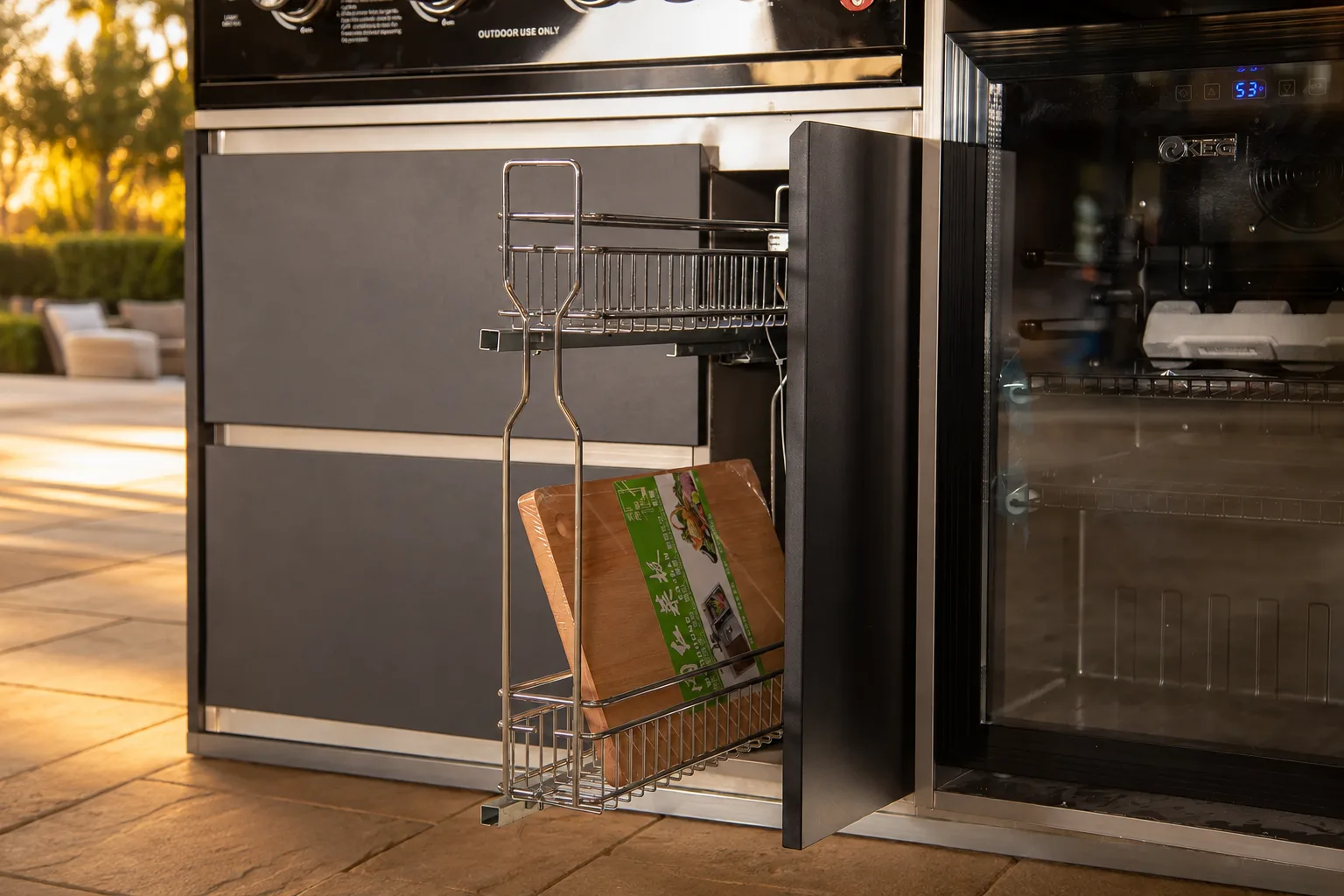
The best outdoor kitchen beverage station keeps drinks cold, supplies organized, and guests out of the cook’s main work zone. Place it near the social side of the kitchen, provide a landing counter beside the refrigerator, protect the area from direct weather, and plan power, drainage, ventilation, and clearances around the exact appliances you select. A compact station can be as simple as an outdoor-rated refrigerator and storage drawer; a larger entertaining space may add a sink, ice maker, or dedicated serving counter.
Start With the Way You Entertain
Before choosing appliances, list what the station must do during a typical gathering. A family that mainly wants cold water and soft drinks needs a different setup from a homeowner who hosts weekend dinners for twelve. Design around real routines instead of filling the cabinet run with equipment that looks impressive but receives little use.
Ask who will use the station, how often drinks will be served, whether guests should help themselves, and what must move between the indoor and outdoor kitchens. Also consider the seasons in which the space will operate. The answers determine the amount of refrigeration, dry storage, counter space, and cleanup capacity that will be useful.
Three common station levels
- Essential: an outdoor-rated refrigerator, a small landing counter, and closed storage for nonfood supplies.
- Entertaining: more cold storage, a wider serving surface, organized drawers, and convenient trash and recycling.
- Full service: a sink or ice maker may be considered when utilities, maintenance, local requirements, and hosting habits justify them.
More equipment is not automatically better. Every appliance adds space, installation, cleaning, and winter-care considerations. A focused layout is often easier to use and easier to keep attractive.
Locate the Station Outside the Hot Zone
A beverage station works best close to guests but away from the grill, side burner, and the cook’s primary path. This allows someone to reach a drink without crossing behind a person carrying hot food or opening a grill lid. In an island layout, the guest-facing end is often a practical starting point. In an L-shaped kitchen, the short return can become a natural serving area.
Do not crowd the refrigerator door against a corner, post, step, or traffic aisle. Check the complete door swing, the pull-out path of baskets or drawers, and the space a person occupies while bending to reach a lower shelf. The station should remain usable while another person cooks and a third person walks past.
If the kitchen is beside a pool, keep wet traffic from cutting through the cooking area. Place drink access on the pool-facing side when the overall layout and electrical safety plan allow it. Slip resistance, drainage, and supervision still matter; review the site as a whole rather than treating the station as an isolated cabinet.
Choose Refrigeration for Outdoor Use
An indoor refrigerator should not be assumed suitable for an exposed patio. Outdoor conditions can include heat, humidity, wind-driven rain, dust, insects, and wider temperature changes. Select equipment specifically documented by its manufacturer for the intended outdoor installation and climate conditions.
Check appliance instructions before finalizing cabinet openings. Ventilation direction, required clearances, electrical supply, leveling, and enclosure details vary by model. Do not block intake or exhaust paths with trim, stored items, or decorative panels. A refrigerator also needs room for its door to open fully and for shelves or bins to be removed for cleaning.
Think about capacity in terms of use, not only cubic feet. Tall bottles, cans, mixers, garnishes, and pitchers create different storage needs. Adjustable shelves may be more valuable than maximum stated capacity. If the station will be shut down seasonally, confirm the manufacturer-recommended cleaning, draining, ventilation, and storage procedure.
Give Every Appliance a Landing Surface
A cold appliance without nearby counter space creates an awkward routine: users open the door, hold several items, and search for somewhere to set them down. Provide a stable landing area next to the refrigerator rather than directly across a busy aisle. It should accommodate a small tray, bottles, and glasses without taking over the cook’s preparation surface.
Counter material should be suitable for the exposure and maintained according to the supplier’s guidance. Sun, freeze-thaw cycles, staining ingredients, and thermal movement can affect materials differently. Rounded or eased edges can be comfortable in a social area, while a modest overhang may help define a serving side. Any seating overhang and support must be designed for the selected material and local conditions.
Organize Storage Around Short Tasks
Keep frequently used items within one or two movements of the refrigerator. A pull-out basket can make supplies visible, while drawers can separate tools, napkins, and reusable accessories. Closed storage generally presents a calmer appearance and protects contents better than open shelving, although it does not make sensitive items safe to leave outdoors indefinitely.
Avoid storing food, paper goods, or anything vulnerable to moisture and pests unless the cabinet and storage method are appropriate for those contents. Many homeowners carry clean glassware and perishable garnishes outside only for the event. That habit reduces clutter and makes end-of-day cleanup more reliable.
A practical storage map
- Place openers, coasters, and serving tools in the top easy-reach drawer.
- Use a lower pull-out for trays or durable accessories that fit securely.
- Reserve a separate compartment for cleaning cloths and approved cleaners.
- Put trash and recycling close enough to use, but away from clean supplies.
- Keep chemicals, fuel, and unsafe items out of food and beverage storage.
Plan Water, Power, and Drainage Before Cabinets
A refrigerator needs a correctly specified electrical connection. Sinks and ice makers introduce water supply, drainage, sanitation, freeze protection, and maintenance questions. Make these decisions before the slab, cabinet openings, or finished surfaces lock the layout in place.
Use exact appliance documentation and have qualified local professionals design and install gas, electrical, plumbing, bonding, drainage, and weather-protection details. Applicable codes, permits, required protective devices, and clearances are determined by local authorities and the selected equipment. Never route cords through wet traffic paths or assume that a covered location equals an approved outdoor installation.
Surface water should move away from cabinet bases and appliance openings. At the same time, drainage must not create slippery routes where guests stand. Coordinate patio slope, roof runoff, downspouts, and cleaning water with the broader site drainage plan.
Protect the Station Without Trapping Heat
A roof, pergola, or strategic orientation can reduce direct sun and rain, helping users stay comfortable and reducing exposure. Protection must not interfere with required ventilation or create unsafe conditions around cooking equipment. Remember that low-angle sun and wind-driven rain can reach far under a cover.
Match finishes to the rest of the outdoor kitchen so the station feels integrated. Repeating cabinet color, metal accents, and counter material usually looks more intentional than introducing a separate theme. Task lighting can help after sunset, but fixtures, controls, and installation methods must be appropriate for their location.
Explore Meta Lifestyle outdoor kitchen configurations to compare how refrigeration, pull-out storage, and preparation areas can be organized within a coordinated cabinet system.
Beverage Station Planning Checklist
- Define the number of users and drinks normally served.
- Keep guest access outside the grill and hot-food work zone.
- Verify full door, drawer, and pull-out clearances.
- Select appliances documented for the intended outdoor location.
- Provide a landing counter beside cold storage.
- Separate clean supplies, waste, and cleaning products.
- Confirm ventilation requirements for every appliance.
- Plan electrical, plumbing, drainage, and winter care early.
- Coordinate shade, rain exposure, patio slope, and lighting.
- Have qualified professionals verify installation and local requirements.
Frequently Asked Questions
Where should a beverage refrigerator go?
Place it near the social or serving side, outside the cook’s hottest work area. Allow the complete door swing, required ventilation, service access, and a nearby landing counter. Final openings and clearances must follow the specific refrigerator’s instructions.
Do I need a sink at an outdoor beverage station?
No. Many efficient stations use refrigeration, counter space, and storage only. A sink can help with rinsing and drink preparation, but it adds plumbing, drainage, sanitation, freeze-protection, and permitting considerations that should be reviewed locally.
Can I use an indoor mini refrigerator outside?
Do not assume an indoor unit is suitable. Choose a refrigerator whose manufacturer documents it for the intended outdoor installation. Exposure, ventilation, temperature range, electrical requirements, and enclosure conditions all matter.
How much counter space should be beside the refrigerator?
There is no universal dimension for every design. Provide enough uninterrupted surface for the tray, bottles, and glasses used during a normal gathering. Test the layout with a full-size plan and confirm that the counter does not narrow an important aisle.
What should stay in beverage-station cabinets?
Durable serving accessories, approved cleaning supplies, and items intended for the cabinet’s conditions are a sensible starting point. Bring perishable food, moisture-sensitive paper goods, and valuable glassware indoors when appropriate. Follow cabinet and appliance care guidance.
Should the beverage station be under a pergola?
Shade can improve comfort and reduce direct exposure, but a pergola does not replace appliance requirements or professional planning. Coordinate roof drainage, ventilation, electrical protection, cooking clearances, and model-specific documentation.
Build the Station Around Flow
A successful beverage station is not defined by the number of appliances. It succeeds when guests can reach drinks, set down a tray, find supplies, and dispose of waste without interrupting cooking. Begin with traffic flow, add reliable cold storage and landing space, then include water or specialty equipment only when it supports the way the household truly entertains. Early coordination with product documentation and qualified local professionals will produce a safer, cleaner, and more durable result.