Pro Program Live Chat +8619050185756

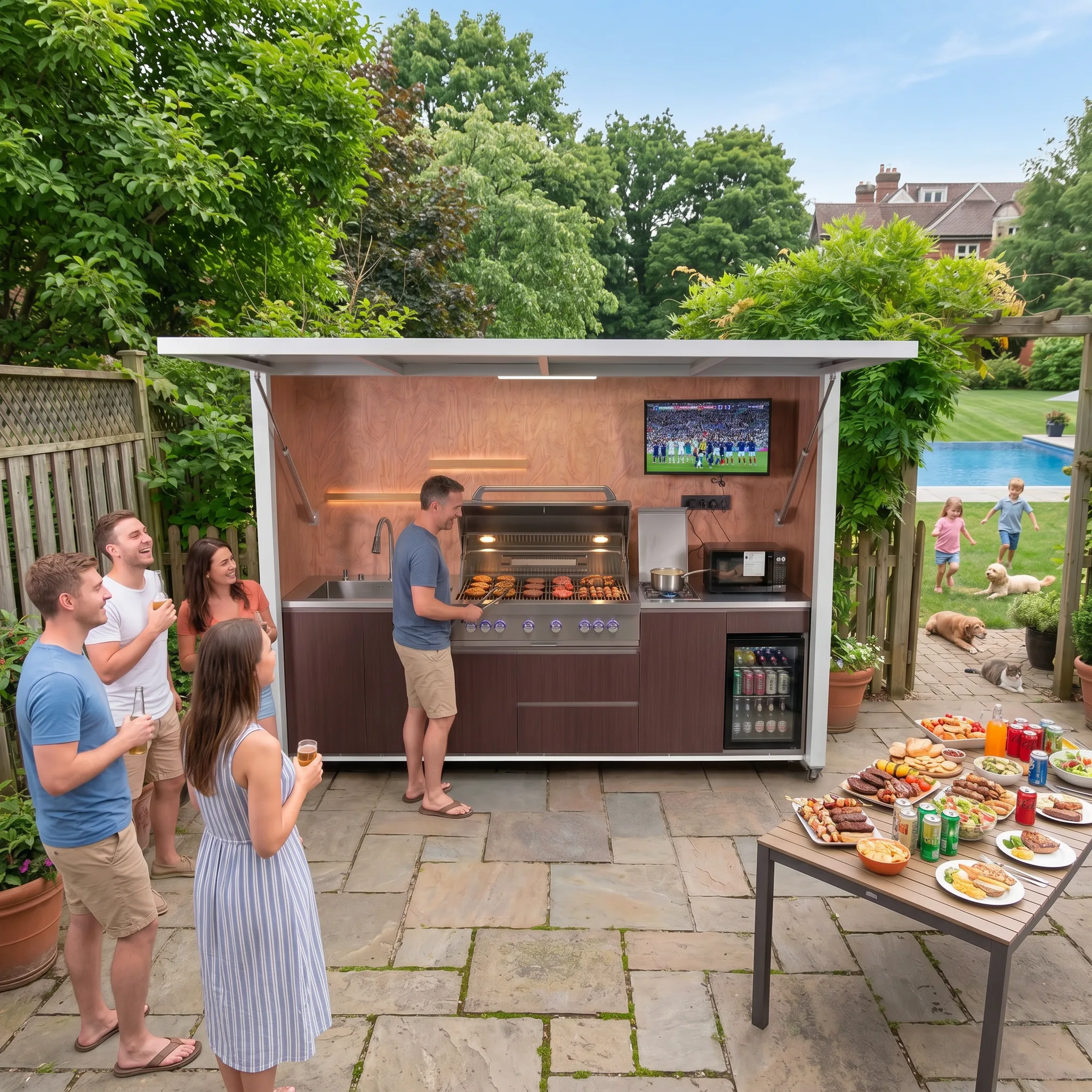
A TV for an outdoor kitchen should be planned as part of the cooking and seating layout, not added after the kitchen is installed. Place it where guests can see it without standing in the cook’s path, protect it from direct weather and excessive heat, control glare, and provide model-appropriate power, connectivity, ventilation, and mounting. Use equipment approved for the intended outdoor exposure, and have qualified professionals verify electrical work, structure, fire clearances, and local requirements.
The best location balances two different experiences: the person cooking needs a clear, safe work zone, while guests need comfortable sightlines and sound. A screen that looks centered in an elevation can still fail if afternoon sun washes it out, the grill lid blocks the view, or people gather in front of a refrigerator door.
Begin With the Viewing Zone, Not the Wall
Mark where people will actually sit or stand during a game, movie, or casual dinner. Include dining chairs, bar stools, lounge seating, and traffic between the house and patio. Then draw sightlines from the primary seats to the proposed screen. A useful position lets most viewers look forward naturally rather than turn sharply or look over the cook.
Screen size and viewing distance should be considered together using the television manufacturer’s guidance. Bigger is not automatically better in a compact pavilion, and a small screen may be unreadable from a pool deck or distant dining table. Make the decision with the final furniture plan and the exact mounting surface dimensions.
Keep the TV Out of the Cooking Hazard Zone
A grill produces heat, grease, smoke, and steam. A sink adds splash exposure. A refrigerator, ice maker, or other appliance needs door and ventilation clearance. Do not position a television where it conflicts with any appliance’s required clearances or where opening a grill hood blocks the screen.
Follow the instructions for the grill, hood, television, mount, enclosure, and outdoor kitchen. Required separation varies by product and installation. A qualified installer should confirm that heat, exhaust, combustible materials, electrical components, and structural support are addressed. Generic spacing found online cannot replace model-specific documentation or local authority requirements.
Choose Equipment for the Actual Exposure
An area beneath a roof can still receive wind-driven rain, condensation, humidity, dust, insects, freezing temperatures, salt air, or intense heat. An ordinary indoor television placed outdoors may not be suitable even when it rarely gets wet. Select a screen and mount specifically intended for the environmental conditions at the site, and verify permitted operating and storage temperatures.
Outdoor displays may be designed for shaded, partial-sun, or brighter locations. Match the product category to real conditions rather than assuming every outdoor TV performs the same. Also confirm whether a separate enclosure is approved. An improvised sealed box can trap heat and interfere with ventilation.
Control Sunlight and Reflections
Observe the proposed location at the times the TV will be used. Morning conditions do not reveal late-afternoon glare. Note direct sun, bright sky, windows, pool reflections, pale paving, and landscape lighting. A roof or canopy can improve shade, but the sun angle changes by season.
Useful strategies may include changing the screen orientation, choosing a display designed for the brightness level, extending shade in a manufacturer-approved way, or using a suitable articulating mount. Avoid placing the screen where users must repeatedly reposition it into a walking path. Do not attach unapproved shades or panels to the kitchen structure.
Outdoor Kitchen TV Planning Checklist
- Mark primary seating and standing locations.
- Check sightlines with grill lids, cabinet doors, and appliances open.
- Observe direct sun and reflections at expected viewing times.
- Confirm the television’s outdoor exposure and temperature suitability.
- Verify the mount and supporting surface for the exact equipment.
- Keep required distances from heat, flame, grease, water, and exhaust.
- Plan code-compliant power, switching, grounding, and weather protection.
- Test Wi-Fi or wired-network performance at the final location.
- Plan speakers so sound does not need to be excessively loud.
- Preserve appliance ventilation and service access.
Plan Power Before the Kitchen Arrives
Outdoor electrical installations need equipment and methods appropriate for the location. The television, receptacles, lighting, appliances, streaming devices, sound equipment, and controls should be included in one coordinated load and circuit plan. Concealment must not make junctions or service points inaccessible.
Have a qualified electrician design and install the system according to the equipment instructions and applicable local codes. Do not run an indoor extension cord through a door or hide an unapproved power strip inside cabinetry. The electrician should determine required protection, grounding, disconnects, weather-resistant components, and separation from plumbing or gas systems.
Verify the Mounting Structure
A television mount creates forces beyond the screen’s static weight, especially when it articulates away from the wall. Wind exposure can add further loading. The mounting surface must be suitable for the exact mount, fasteners, and equipment. Decorative panels and cabinet skins should not be assumed to provide structural support.
Ask the outdoor kitchen supplier for drawings identifying approved mounting areas and concealed utilities. A qualified professional should verify the support and installation. Drilling into a panel without knowing what is behind it could damage wiring, plumbing, finishes, or structural components.
Coordinate Cables, Streaming, and Wi-Fi
Test the network at the proposed TV position with the doors closed and the appliances operating. Metal cabinetry, masonry, distance from the router, and outdoor walls may affect the signal. If reliable streaming matters, plan outdoor-rated network equipment or a wired connection with an appropriate professional.
Decide where streaming devices, cable boxes, and control equipment will live. They need permitted temperature conditions, ventilation, weather protection, power, and service access. Avoid stuffing devices and adapters into a hot, sealed cabinet. Use cable routes approved for the environment and keep signal cables coordinated with electrical work.
Do Not Forget Sound
An outdoor TV’s built-in speakers may compete with conversation, wind, pool equipment, and traffic. Instead of simply increasing volume, create a focused sound plan. Correctly positioned outdoor-rated speakers can improve clarity for listeners while reducing noise at the property boundary.
Consider neighboring homes and local noise rules. Aim speakers toward the seating zone and away from adjacent properties. If speakers or a soundbar will be mounted to the kitchen, confirm the attachment method and weather rating with the relevant manufacturers.
Compare Three TV Locations
Centered Behind the Cooking Counter
This creates a strong focal point and can work in a self-contained kitchen. It requires careful heat, grease, ventilation, and sightline planning. The cook may occasionally block the screen, so it is usually better for casual viewing than a theater-style layout.
On a Side Wall or End Panel
A side position may separate the screen from the main heat source and keep it visible while cooking. Check neck angles from the seating area and make sure an articulating mount does not project into circulation space.
Across From the Kitchen
Mounting the TV on a separate wall can keep electronics away from cooking equipment and face both the cook and guests. It may require longer power and data routes, added weather protection, and coordination with landscape or pool views.
Plan for Cleaning and Seasonal Care
Grease film, pollen, dust, and insects can collect on screens, vents, and mounts. Leave enough access to clean and inspect the equipment using manufacturer-approved methods. Do not spray the television directly or use household chemicals that may damage protective finishes.
In cold or storm-prone regions, follow the display manufacturer’s operating, storage, and seasonal instructions. A cover may help only if it is compatible, ventilated as required, and installed after equipment has cooled. The specific manual controls whether the screen should remain installed or be stored during part of the year.
Questions to Ask Before Finalizing the Design
Ask for the exact appliance clearances, approved mounting zones, cabinet drawings, electrical requirements, overall roof dimensions, lighting locations, and drainage details. Identify who will install the mount, make electrical connections, configure the network, and seal any approved penetrations. Photograph concealed utilities before panels are closed so future service is safer.
Explore META LIFESTYLE’s outdoor kitchen collection and plan the television around the documentation for the exact configuration.
Frequently Asked Questions
Can I use a regular indoor TV in a covered outdoor kitchen?
Do not assume a roof makes an indoor television suitable. Outdoor spaces can expose equipment to humidity, condensation, temperature extremes, dust, and wind-driven moisture. Use a product approved by its manufacturer for the actual location.
How far should a TV be from a grill?
There is no universal safe distance. Follow the grill, hood, television, mount, and kitchen instructions and have a qualified professional verify heat, flame, grease, ventilation, and local fire requirements.
Should the outdoor TV be above eye level?
It can be slightly elevated to remain visible, but prolonged steep viewing angles may be uncomfortable. Test the position from the final seating and standing zones before installing the mount.
Can the TV be mounted directly to an outdoor kitchen panel?
Only if the panel and concealed structure are approved to support the exact mount and display. Obtain product drawings and have the attachment verified rather than treating a decorative surface as structural.
Should I use Wi-Fi or a wired connection?
Either can work. Test real signal performance and consider reliability, cable routing, weather exposure, and service access. Use equipment and installation methods approved for outdoor conditions.
Request a META LIFESTYLE Quote
For outdoor kitchen layout and product information, visit the META LIFESTYLE contact page. Both numbers below are official META LIFESTYLE WhatsApp contacts: +8619050185756 and +1 (626) 735-5685. Share your patio dimensions, seating plan, preferred appliances, and TV location when requesting a quote.