Pro Program Live Chat +8619050185756

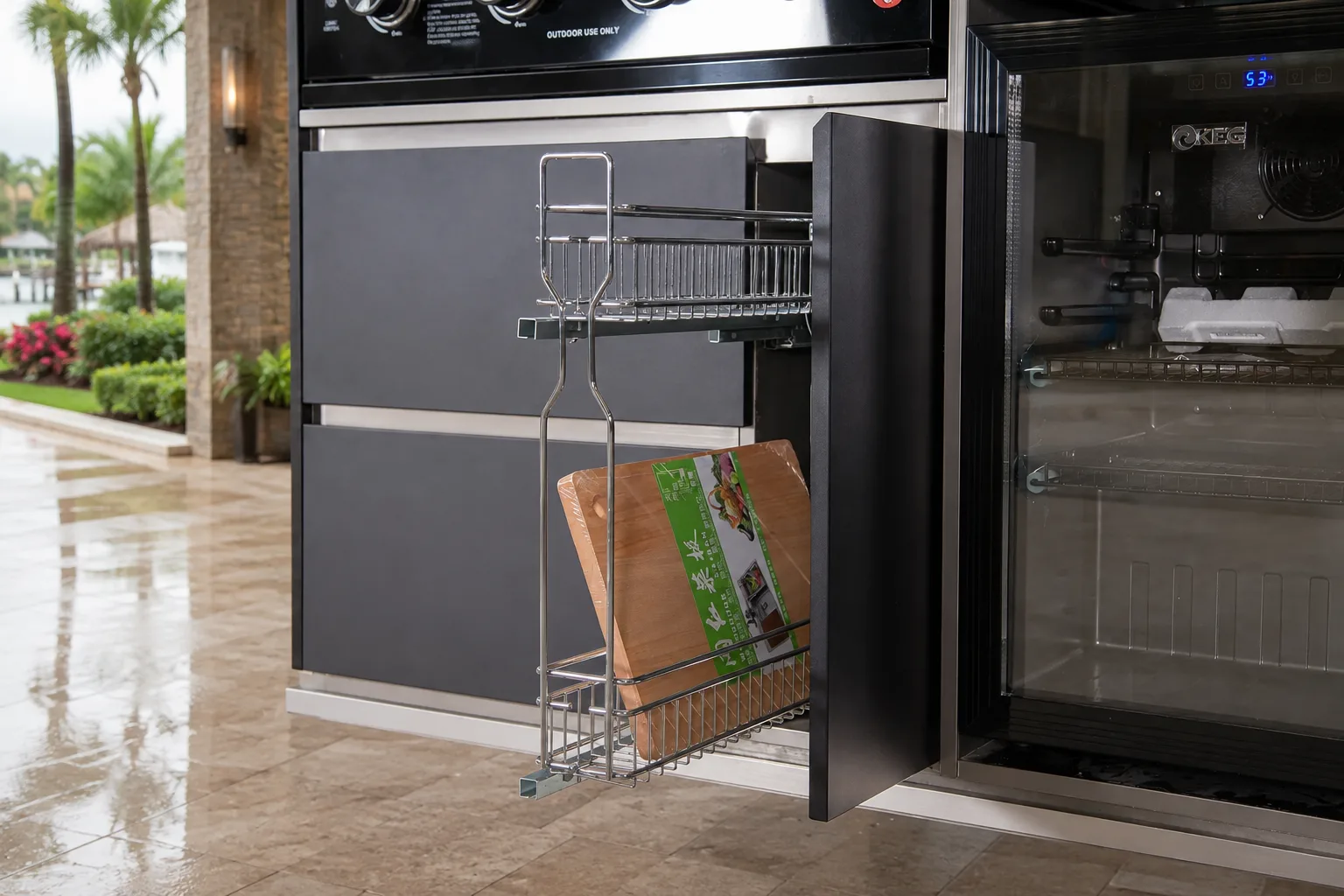
Prevent moisture in outdoor kitchen cabinets by controlling water at the source, preserving required ventilation, keeping cabinet contents dry, and inspecting the installation after rain and seasonal weather changes. The kitchen should sit on a properly drained surface, roof runoff and irrigation should be directed away, appliance vents must remain unobstructed, and wet items should never be shut inside. Because cabinet and appliance designs differ, use the exact manufacturer documentation and qualified local professionals for ventilation, drainage, electrical, plumbing, and installation decisions.
Understand Where the Moisture Comes From
Moisture does not enter an outdoor cabinet in only one way. Wind-driven rain can reach beneath a roof. Irrigation spray can repeatedly wet doors and seams. Surface water can collect at cabinet bases. Humid air can condense on cooler materials, and a small plumbing leak may remain hidden behind a sink or refrigerator. Wet towels, cutting boards, or cleaning tools can also introduce moisture from inside.
Finding the source is more useful than simply wiping the cabinet. Note whether dampness appears after rain, after irrigation, during humid mornings, when an appliance operates, or after using the sink. The timing and location help distinguish an exterior exposure problem from condensation, a spill, or a utility leak.
Start With Site Drainage
The finished patio should move water away from cabinet bases and occupied areas. Low spots beside an outdoor kitchen can hold runoff after every storm, exposing lower panels, anchors, utilities, and joints to repeated wetting. Roof discharge should not land directly behind the cabinet run or splash onto doors.
Coordinate the patio slope, drains, downspouts, landscaping, and cabinet position before installation. The correct solution depends on the paving system, soil, property grading, nearby foundations, and local stormwater requirements. Qualified local professionals should design the site route and authorities should determine applicable permits or rules.
After installation, observe the kitchen during and after rain. Look for pooling, splashback, water tracking along edges, or runoff arriving from another part of the patio. Correct the source promptly rather than relying on towels or a cover as a permanent drainage solution.
Protect the Kitchen From Direct Exposure
A roof, pergola, or thoughtful orientation can reduce direct rain and sun, but covered does not mean enclosed or dry. Low-angle storms can push water far beneath an overhang. Open sides admit humid air, and roof drainage can create concentrated flows near the kitchen.
Keep irrigation heads aimed away from cabinetry and appliances. Check the pattern when wind is present and after plants are trimmed. Repeated spray can reach places that appear protected during a quick daytime inspection.
If a cover is used, it must be appropriate for the exact cabinet or appliance and used according to manufacturer instructions. An unapproved cover may trap moisture, block ventilation, touch hot equipment, or interfere with controls. Never cover an operating appliance unless its documentation specifically permits it.
Preserve Documented Ventilation
Ventilation requirements vary. Refrigerators may need intake and exhaust paths, while cabinets containing gas components can require specific openings. Decorative trim, stored supplies, liners, or aftermarket organizers must not block documented vents.
Do not drill new holes or assume that more openings are automatically safer. Vent location and size can affect appliance operation, gas safety, weather entry, pests, and cabinet strength. Use only model-specific instructions and have qualified professionals address gas, electrical, fire-clearance, and enclosure details.
Leave service access available. A refrigerator or other built-in appliance should not be sealed permanently into an enclosure. Technicians need to inspect connections, drainage, wiring, and ventilation without damaging the kitchen.
Store Only Clean, Dry Items
A cabinet cannot remain dry if damp items are placed inside. Let cutting boards, towels, grill tools, trays, and cleaning accessories dry fully before storage. Wipe containers that were sitting in rain or condensation. Empty pull-out baskets and drawers after a wet event so hidden surfaces can be checked.
Paper goods, cardboard packaging, seasonings, food, and fabrics are vulnerable to humidity and pests. Many homeowners are better served by bringing these items indoors between events. Outdoor cabinetry can organize durable accessories, but it should not be treated as climate-controlled pantry storage.
Avoid filling every space tightly. Overpacked cabinets are hard to inspect and slow to dry if moisture appears. Use removable organizers that are compatible with the cabinet and leave documented ventilation paths open.
Manage Refrigerator Condensation Carefully
A cold appliance in humid outdoor air may develop moisture around doors, frames, or nearby surfaces under some conditions. Confirm that the refrigerator is installed, leveled, ventilated, and operated within its documented range. Check the gasket for debris or damage and ensure the door closes fully.
Do not alter temperature controls, drainage, or ventilation based on a generic online recommendation. Follow the exact manual. If condensation is persistent, water appears inside the enclosure, or the unit fails to maintain proper operation, contact appropriate service support.
Keep the refrigerator opening clear. A cabinet door, pull-out basket, or stored object should not prevent the appliance door from closing. Clean spills promptly and remove expired contents before they leak.
Check Sinks, Ice Makers, and Water Lines
Plumbing can create slow moisture problems that are easy to miss. Inspect visible supply connections, drains, traps, filters, and shutoffs according to the system instructions. Look for staining, corrosion, swelling, odors, or dampness after using the sink or ice maker.
Water systems may require freeze protection or seasonal shutdown in colder climates. The procedure depends on the appliance, piping, valves, and local conditions. Qualified local professionals should install, inspect, and winterize plumbing using exact documentation. Do not assume an empty sink means the connected system contains no water.
Clean Without Flooding the Cabinets
Outdoor kitchens need regular cleaning, but high-pressure spray can force water into seams, vents, controls, and appliance openings. Use the methods and products approved for each material. Apply cleaner to a cloth when appropriate rather than saturating the cabinet.
After cleaning, dry doors, drawer edges, handles, pull-outs, and interior surfaces. Leave approved compartments open briefly when the instructions allow, while ensuring they do not create a safety or wind hazard. Never mix cleaning chemicals or store them with food and serving supplies.
Know the Early Warning Signs
Prompt attention can keep a small problem from becoming a larger repair. Investigate musty odor, recurring condensation, water marks, discoloration, finish changes, swollen stored materials, corrosion, insects, or a drawer that suddenly binds. These signs do not identify a single cause, but they show that inspection is needed.
Document when and where the condition appears. Photographs taken after rain, appliance operation, or sink use can help an installer or service professional diagnose the source. If water is near electrical equipment, gas components, or damaged wiring, stop using the affected area and contact qualified help.
Explore Meta Lifestyle outdoor kitchen configurations while planning storage and appliance locations so drainage, pull-out access, ventilation, and service needs can be considered together.
Moisture-Prevention Checklist
- Confirm the patio moves water away from cabinet bases.
- Redirect roof runoff and irrigation spray.
- Preserve every documented appliance and gas ventilation opening.
- Store only clean, dry, outdoor-appropriate items.
- Keep paper, food, cardboard, and fabrics indoors when appropriate.
- Inspect refrigerator doors, gaskets, vents, and drainage.
- Check plumbing connections after use and before seasonal shutdown.
- Clean with approved methods instead of high-pressure flooding.
- Inspect after storms and changing seasons.
- Use qualified professionals for persistent moisture or utility concerns.
Frequently Asked Questions
Why is the inside of my outdoor cabinet damp?
Possible sources include wind-driven rain, irrigation, surface water, condensation, wet stored items, spills, or plumbing leaks. Note when dampness appears, empty the cabinet, dry it, and inspect the surrounding installation. Persistent moisture needs professional diagnosis.
Should outdoor kitchen cabinets have vents?
Ventilation depends on the cabinet contents and appliance requirements. Gas and refrigeration installations can require specific openings. Do not create or block vents without the exact product documentation and qualified professional guidance.
Can I leave towels and paper plates outdoors?
They can absorb humidity and attract pests. Bringing moisture-sensitive items indoors is usually more reliable. If items are stored outside temporarily, make sure they are dry and placed only in suitable clean storage.
Can I pressure-wash outdoor cabinets?
Do not assume high-pressure cleaning is permitted. It can force water into seams, vents, controls, and electrical areas. Follow the manufacturer-approved cleaning method for every cabinet, finish, and appliance.
Will a pergola keep the cabinets dry?
It can reduce direct exposure but does not create an indoor environment. Wind-driven rain, humidity, irrigation, and surface water still matter. Pergola drainage and appliance requirements must be coordinated with the full site.
What should I do if I find mold or a strong odor?
Stop storing food or serving items in the affected space, remove contents safely, and identify the moisture source. Follow material-specific cleaning guidance and use qualified remediation or service help when the condition is extensive or recurring.
Control Water Before It Reaches Storage
The most effective moisture strategy begins outside the cabinet. Good grading, controlled runoff, correct installation, and unobstructed ventilation prevent more problems than repeatedly drying the interior. Combine those fundamentals with careful storage and routine inspection. When dampness returns, treat it as evidence of a source that needs correction rather than a normal condition to ignore.