Pro Program Live Chat +8619050185756

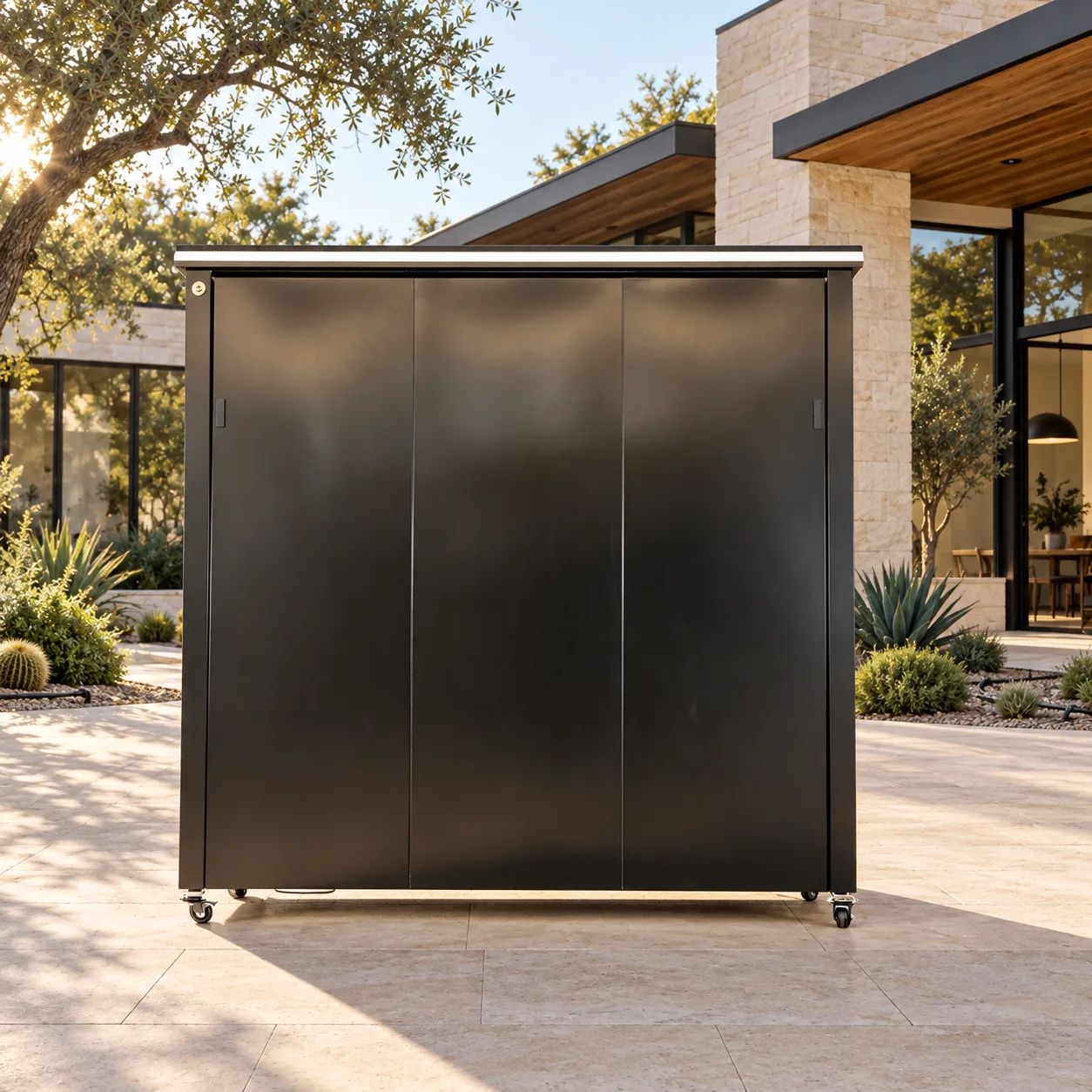
Keep sprinkler and irrigation water off an outdoor kitchen whenever possible. Repeated overspray can leave mineral deposits, keep joints and paving wet, drive debris toward openings, and expose finishes or appliances to water in ways their documentation may not permit. Plan irrigation zones, drainage, planting, and the exact META LIFESTYLE kitchen location together.
Outdoor-rated does not mean every motor, outlet, burner, refrigerator, television, shutter, seal, or cabinet opening may be sprayed. Follow model-specific instructions and use qualified local professionals for plumbing, electricity, gas, drainage, foundations, fire clearances, and permits.
Map Every Source of Water
Mark fixed sprays, rotors, drip emitters, hoses, pool splash, roof runoff, downspouts, cleaning water, and low spots. Wind can carry irrigation beyond its intended pattern. Run each zone in calm weather and observe it again in typical wind.
Photograph wet areas and note which surfaces remain damp. A landscape professional can adjust nozzles, pressure, timing, and plant zones without relying on guesswork.
Create a Dry Service Zone
Provide a clear paved area around the kitchen that supports its verified weight and keeps soil, mulch, roots, and irrigation parts away from wheels, vents, panels, and utility access. Exact clearances come from product and appliance documentation.
A dry zone makes inspection easier and prevents plants from hiding leaks, blocking shutter travel, or growing into ventilation and electrical areas.
Irrigation Planning Checklist
- Show the kitchen footprint, open position, wheels, and service panels.
- Map every sprinkler arc and likely wind drift.
- Keep emitters outside required equipment clearances.
- Direct spray away from outlets, motors, lights, and appliances.
- Prevent mulch and soil from covering wheels or cabinet edges.
- Grade paving so water moves away from the kitchen and house.
- Keep drains and utility shutoffs visible.
- Use plants with compatible water needs.
- Test every zone before final handover.
- Recheck patterns seasonally and after repairs.
Why Overspray Matters
Irrigation water may contain dissolved minerals that dry as spots or scale. Repeated wetting can carry soil onto paving, hold pollen against finishes, and create slippery areas. Horizontal sprinkler streams may reach openings that ordinary rainfall does not.
Do not assume corrosion resistance or waterproofing beyond verified documents. Request written care and exposure guidance for the exact finish, appliances, electrical components, shutter, and configuration.
Use Drip Irrigation Thoughtfully
Drip systems can reduce airborne spray, but damaged tubing, loose fittings, clogged emitters, or excessive run time can saturate soil beside the kitchen. Keep valves, filters, emitters, and connections accessible.
Do not route irrigation through foundation, anchoring, electrical, gas, or drainage zones without professional coordination. Record the final route before paving or planting conceals it.
Separate Plants From Heat
Plants must not crowd grills, hot surfaces, vents, roofs, shutters, doors, or service areas. Leaves can drop debris and vines may enter moving components. Combustible vegetation and mulch require appropriate separation.
Fire clearances and ventilation must follow exact appliance documentation and qualified local professionals or authorities. Never use planting as an improvised wind barrier around a grill.
Protect Electrical Equipment
Outdoor kitchens may include outlets, lighting, refrigeration, televisions, controls, and shutter motors. A qualified electrician must design circuits, grounding, protection, disconnects, enclosures, and cable routes for the location.
Never spray electrical equipment. If irrigation reaches a damaged outlet, cord, motor, or enclosure, stop use and arrange qualified inspection instead of opening or drying the component yourself.
Coordinate Utility Trenches
Irrigation trenches can cross gas, water, drainage, and electrical routes. Locate utilities before digging. A landscape crew should never discover a kitchen service line with a shovel.
Gas, plumbing, and electrical work must be completed and tested by qualified local professionals. Shutoffs should remain visible and reachable after plants mature.
Grade the Patio Away From the Kitchen
Avoid placing the unit in a low point. Paving should move irrigation, rain, and cleaning water toward an approved destination without directing it beneath wheels, into cabinets, toward the house, or across main walking routes.
A drainage professional should coordinate slope, joints, drains, roof water, and planting beds. Do not assume runoff may enter a pool, street, landscape, or neighboring property.
Keep Wheels and Supports Clean
For a rolling configuration, soil and mulch around casters can obstruct movement and hide damage. Keep the route level, firm, stable, and clear. Do not roll the kitchen across saturated soil, loose gravel, or temporary boards unless specifically approved.
Inspect wheels, brakes, tracks, and bottom rails using documented procedures. Do not apply generic lubricants that may attract dirt or affect finishes.
Plan the Shutter Routine
Before closing a shutter, turn off appliances and let them cool as directed. Remove waste, clear the travel path, and follow cleaning and ventilation instructions. Closing wet debris inside can create maintenance problems.
A shutter is not permission to spray the exterior. If it binds, moves unevenly, or experiences abnormal water entry, stop operation and use qualified service.
Keep Cleaning Separate From Irrigation
Do not use sprinklers as a cleaning system. Use approved cleaners, tools, and controlled water methods. Pressure washing can force water into burners, motors, seals, outlets, cabinets, and refrigeration equipment.
Test approved products in an inconspicuous area. Collect grease and food solids instead of washing them into drains or planting beds.
Account for Seasonal Changes
A spray head that misses the kitchen in spring may hit it when wind shifts or plants are pruned. Pressure, nozzle wear, landscape growth, and contractor adjustments can change patterns.
Inspect at the start of each irrigation season and after repairs. Qualified local professionals should control freeze protection, outdoor plumbing winterization, and reopening.
Compare Two Landscape Strategies
Spray-free hardscape zone
A generous paved zone simplifies inspection and limits direct wetting. It requires careful drainage and may increase hardscape area.
Nearby low-water planting
Restrained planting can soften the setting while using drip irrigation outside the service zone. Roots, mature size, debris, fire clearance, and access still need planning.
Many premium projects combine both: a clean operating area with planting beyond the equipment and circulation zone.
Test Before Handover
Operate every irrigation zone while the kitchen is closed and, when safe, in normal open configuration. Confirm no water strikes the product, utilities, or service area and runoff drains correctly.
Record valve locations, controller zones, photos, approved care methods, and utility routes. Give the information to the owner, landscape team, and kitchen service providers.
Questions to Ask Before Ordering
- Where will each irrigation zone spray or drip?
- What clearances apply to the kitchen and appliances?
- Where are gas, electrical, water, and drain routes?
- How will paving and planting beds drain?
- Can all panels, wheels, motors, and shutoffs be serviced?
- Who will inspect irrigation after seasonal adjustments?
Explore the META LIFESTYLE outdoor kitchen collection and request model-specific exposure and care guidance before landscaping.
Frequently Asked Questions
Can sprinklers hit an outdoor kitchen?
They should be directed away unless exact documentation explicitly permits the exposure. Horizontal spray may reach components differently from rain.
Is drip irrigation always safe beside the kitchen?
No. Leaks or saturated soil can affect paving, foundations, utilities, and access. Place and inspect it professionally.
Can I pressure-wash mineral spots?
Only if every affected manufacturer permits it. Use documented cleaners and controlled methods.
How far should plants be from the grill?
Use exact appliance fire and ventilation clearances plus qualified local guidance. There is no universal distance.
What if irrigation reaches an outlet or motor?
Stop using affected equipment and arrange qualified inspection. Do not open energized components or assume they are safe after drying.
Request a META LIFESTYLE Quote
Share the site plan, irrigation zones, photos, utilities, and landscaping concept through the META LIFESTYLE contact page. Both numbers are official META LIFESTYLE WhatsApp contacts: +8619050185756 and +1 (626) 735-5685.