Pro Program Live Chat +8619050185756

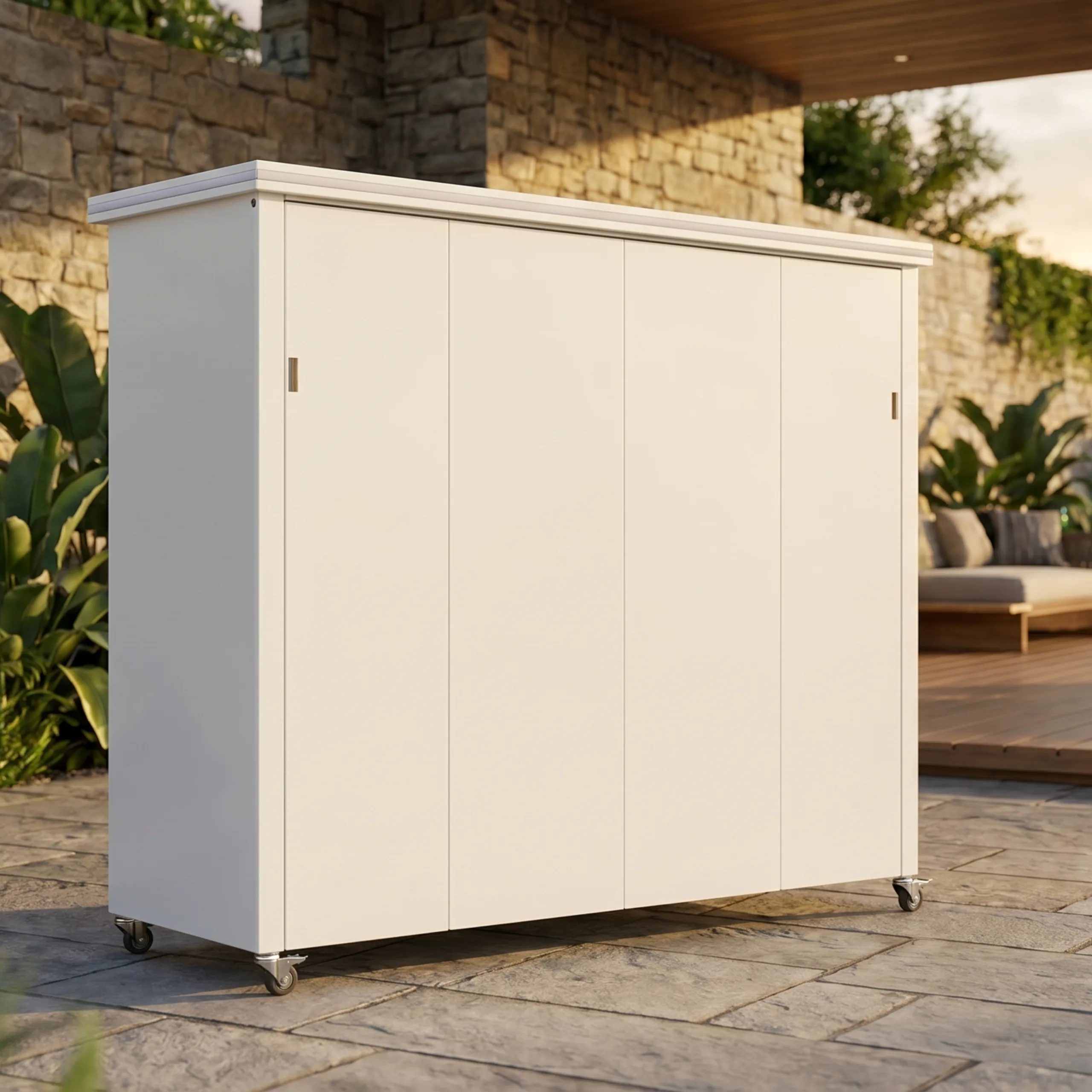
The best way to secure an outdoor kitchen at a vacation home is to use several layers: choose a visible but controlled location, remove portable valuables, close and protect approved storage, shut down utilities according to manufacturer instructions, use exterior lighting and property security, and arrange periodic inspections. A cabinet lock by itself cannot address weather, unauthorized use, utility leaks, pests, or maintenance issues while the property is empty.
Vacation properties create a different planning problem from primary residences. The kitchen may sit unused for weeks, guests or service providers may have access, and a minor drainage or electrical issue can go unnoticed. A thoughtful design should make the cooking area easy to open for a visit, easy to close when everyone leaves, and easy for an authorized caretaker to inspect without disturbing the entire property.
Start With a Layered Security Plan
Think of outdoor-kitchen security as four connected layers: the property boundary, the outdoor-living zone, the kitchen equipment, and the operating procedures. Fences, gates, cameras, lighting, cabinet closures, utility controls, and a departure checklist each solve a different problem. When one layer is unavailable or unsuitable, the others become more important.
Begin by listing what you are trying to protect. Built-in cabinetry presents different risks from portable cookware, countertop appliances, propane cylinders, electronics, beverages, tools, or cleaning chemicals. The correct plan also depends on whether the home is owner-only, managed as a rental, shared with family, or serviced by contractors.
Choose a Location That Supports Natural Oversight
An outdoor kitchen hidden at the far edge of a large property may feel private, but it can also be difficult to monitor. A location visible from occupied rooms, exterior cameras, or a caretaker’s normal route may discourage unauthorized use and make storm or maintenance checks simpler.
Visibility should not come at the expense of safety or comfort. Smoke management, fire clearances, access, prevailing conditions, utilities, and the selected equipment documentation still control the layout. Avoid putting a cooking zone in a narrow side yard simply because it is close to a camera or gate.
Site-planning questions
- Can the kitchen be seen from the house without being exposed to the street?
- Is the route from parking or the house adequately lit?
- Can authorized service providers reach utility shutoffs?
- Will cameras cover approaches without intruding on neighbors or guests?
- Does the location drain safely when the property is unattended?
- Can a caretaker inspect the area after a storm or freeze?
Separate Built-In Equipment From Portable Valuables
Large installed components are not the only items at risk. Grilling tools, small appliances, premium cookware, speakers, tablets, beverage accessories, and decorative objects can be easier to remove and more vulnerable to moisture. Decide which items truly need to stay outside between visits.
Use only storage locations appropriate for the item and outdoor conditions. Food, paper goods, textiles, chemicals, batteries, electronics, and fuels each have different temperature, moisture, pest, and safety considerations. If the manufacturer’s instructions require an item to be removed or stored indoors, an enclosed outdoor cabinet does not override that requirement.
Do not assume a closed cabinet is lockable, weatherproof, pest-proof, or suitable for fuel storage. Verify the exact cabinet construction, ventilation, latch or lock options, and intended use before ordering. Never add an aftermarket lock where drilling or hardware could compromise a finish, seal, utility line, structural member, or warranty.
Compare Common Security Measures
| Measure | What it helps address | Important limitation |
|---|---|---|
| Lockable gate | Controls casual access to the outdoor zone | Must preserve required emergency and service access |
| Exterior lighting | Improves visibility and routine inspection | Placement should avoid glare and neighbor disturbance |
| Camera or alarm coverage | Supports monitoring and notifications | Depends on power, connectivity, privacy rules, and maintenance |
| Approved cabinet lock | Limits access to compatible storage compartments | Does not make storage weatherproof or safe for every item |
| Remove portable items | Reduces attractive, easy-to-carry valuables | Requires organized indoor storage and a repeatable routine |
| Local caretaker checks | Finds weather, pest, drainage, and utility problems | Needs clear authorization and a documented checklist |
Control Gas, Electricity, and Water Carefully
An unattended outdoor kitchen needs a clear utility shutdown procedure. The correct steps vary by appliance, fuel source, plumbing design, climate, and local requirements. Obtain the operating and seasonal-shutdown instructions for every selected component, then have licensed local professionals identify appropriate shutoffs and label them clearly.
Do not improvise a gas shutdown, drain plumbing, disconnect electrical equipment, or move a propane cylinder without following applicable product documentation and professional guidance. Some systems may need to remain energized for supported controls or protection functions; others may require isolation. The project team should provide a written procedure for the actual installation.
Utility controls should be accessible to authorized people but protected from casual operation. Photograph their normal positions, identify who may use them, and keep the instructions with the property-management records. If the kitchen serves rental guests, keep owner-only controls separate from normal user controls.
Prepare for Weather, Even During Short Absences
Security includes protecting the kitchen from environmental damage. Before leaving, remove debris, clean cooking surfaces according to appliance instructions, empty waste, check drains, close approved doors or shutters, and secure only those covers specifically compatible with the equipment. An incorrect cover can trap moisture, obstruct ventilation, or contact a hot surface.
Seasonal properties may require additional freeze, storm, wildfire, coastal, or extreme-heat procedures. Those requirements should come from model-specific documents and qualified local professionals. Never infer wind resistance, snow capacity, water protection, or fire performance from product appearance.
Design for Property Managers and Guests
If other people use the home, make the kitchen intuitive without making every system freely adjustable. Create a short guest guide that covers normal appliance operation, cool-down, cleaning, waste handling, prohibited storage, emergency contacts, and what to do if equipment appears damaged. Keep technical shutdown procedures for the owner or manager.
A property manager should know what a normal closed kitchen looks like. Provide dated photos, an equipment list, serial or model records where appropriate, and a simple inspection route. This makes it easier to notice a missing item, open door, blocked drain, damaged cover, or unexpected utility condition.
Vacation-Home Departure Checklist
- Allow all cooking equipment to cool completely.
- Clean appliances and surfaces according to manufacturer instructions.
- Remove food, waste, portable electronics, valuable tools, and unsuitable stored items.
- Check cabinet doors, appliance lids, drains, and approved covers.
- Follow the documented gas, electrical, water, and seasonal shutdown procedure.
- Verify that required vents and drainage paths remain unobstructed.
- Confirm gates, compatible locks, lighting, cameras, and alarms are operating.
- Record any damage or maintenance need before departure.
- Notify the authorized caretaker of the vacancy period and inspection schedule.
- Keep emergency and qualified service contacts available remotely.
Plan Security Before Selecting the Kitchen
Security is easier when it is part of the original design. Ask where doors open, which storage modules are compatible with locks, how utility panels are accessed, whether wheels or movable elements can be secured as documented, and how approved covers fit. Also consider whether the finish and hardware suit the property’s exposure and maintenance schedule.
Explore the META LIFESTYLE outdoor kitchen collection for possible configurations, then request exact documentation for the model being considered. Product photographs can show form and storage concepts, but they do not establish lockability, weather ratings, utility requirements, or installation approval.
Frequently Asked Questions
Should every outdoor kitchen cabinet have a lock?
Not necessarily. Locks may be useful for selected compatible compartments, but the best plan usually removes portable valuables and restricts access to the overall outdoor zone. Confirm lock options with the product supplier before modifying cabinetry.
Can I leave grilling tools outside all year?
It depends on the tool materials, storage environment, climate, and manufacturer guidance. Humidity, salt air, insects, and temperature swings can affect items even inside a cabinet. Valuable or sensitive tools are often better stored indoors during long vacancies.
Should I turn off the gas when leaving a vacation home?
Follow the written instructions for the installed fuel system and appliances, along with guidance from a licensed local gas professional. Do not rely on a generic internet checklist for a safety-critical shutdown.
Can cameras replace caretaker visits?
No. Cameras may show access or visible damage, but they cannot reliably identify every leak, odor, blocked drain, pest issue, corrosion problem, or concealed utility condition. Periodic authorized inspection remains valuable.
Is a rolling outdoor kitchen easier to secure?
Mobility can simplify repositioning or sheltered storage, but it also creates anchoring, wheel, utility-connection, and unauthorized-movement questions. Use the product only as documented and never improvise restraints that could damage it or create a hazard.
What information should I request before ordering?
Ask for exact dimensions, component lists, storage and ventilation details, approved lock or cover options, utility requirements, installation instructions, maintenance guidance, and model-specific documentation relevant to the property location.
Request a Vacation-Home Kitchen Quote
A secure outdoor kitchen begins with a plan for the property, its users, and the weeks when nobody is present. Share the site location, photos, approximate dimensions, intended appliances, occupancy pattern, climate concerns, and management arrangement when requesting guidance.
Use the META LIFESTYLE contact page to request a quote. Both numbers below are official META LIFESTYLE WhatsApp contacts: