Pro Program Live Chat +8619050185756

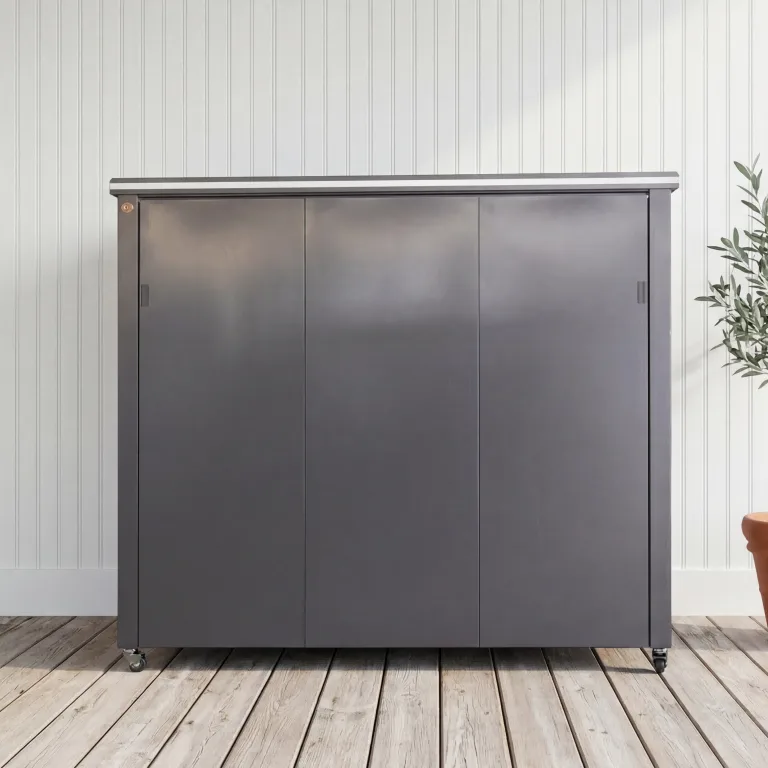
Covering or closing an outdoor kitchen can reduce exposure to pollen, leaves, sunlight, and wind-driven moisture, but the correct method depends on the exact kitchen and appliances. Never close panels or install a cover while equipment is hot, and never block required ventilation openings, drains, gas access, or appliance clearances. Use only cover and closure methods permitted by the manufacturer’s current instructions.
What a Cover Can—and Cannot—Do
A suitable cover can keep loose debris off controls and work surfaces, reduce ultraviolet exposure, and make routine cleaning easier. Built-in shutters or doors can also create a clean appearance when the kitchen is not operating. These benefits are practical, especially under trees, near gardens, or on patios exposed to seasonal pollen.
However, a cover does not make equipment waterproof, freeze-proof, storm-proof, corrosion-proof, or maintenance-free. Moisture can enter from below, condensation can form inside, and wind can drive rain through small openings. The kitchen still needs approved drainage, ventilation, utility protection, cleaning, and seasonal care.
Allow Every Appliance to Cool First
Grills, grates, cookware, grease trays, and nearby panels can remain hot long after flames are turned off. Closing a kitchen too soon can trap heat, damage materials, or create a fire hazard. Follow the appliance manufacturer’s shutdown and cooling instructions; do not rely on touch alone.
Before covering, verify that burners and controls are off, approved fuel procedures have been followed, and no hot tools or food remain inside. A responsible adult should complete the shutdown rather than assuming another guest handled it.
Do Not Block Required Ventilation
Built-in grills, refrigerators, ice makers, and other appliances may rely on openings in the cabinet or enclosure. Those openings must remain clear during operation and may need to remain unobstructed at other times. A tight wrap around the entire kitchen can trap heat or moisture and may conflict with product instructions.
Use the exact installation manual to identify air openings, condenser ventilation, drainage paths, and service panels. Gas, electricity, ventilation, fire clearances, structures, and permits should be reviewed by qualified local professionals. Never alter an enclosure or closure system to make it look tighter without verifying its effect on the complete installation.
Built-In Closures vs. Fabric Covers
Built-in doors or shutters
Integrated closures can protect the work area and simplify daily use because they remain attached to the kitchen. Their hinges, tracks, motors, supports, seals, and wind behavior must be part of the engineered product design. Confirm the correct open position during use and the exact procedure for closing.
Individual appliance covers
A model-specific grill or appliance cover may fit controls, lids, handles, and ventilation better than a generic cover. It is easier to remove in sections and may leave cabinet ventilation open. Verify that the manufacturer approves the cover and follow its care instructions.
Full-kitchen fabric covers
A large cover may appear convenient, but poor fit can create abrasion, water pockets, condensation, and wind loads. It can also obstruct vents or become difficult to secure safely. Use a full cover only when the kitchen manufacturer permits it and provides clear requirements.
Moisture Management Matters
A cover can keep direct rain off a surface while trapping humidity underneath. Moisture may condense when warm daytime air cools at night. If the cover rests directly on counters or painted metal, trapped grit and movement can affect the finish.
Choose breathable or vented solutions only when recommended for the product, and keep drainage paths clear. Do not leave wet towels, sponges, food, or standing water inside a closed kitchen. After cleaning, allow surfaces to dry according to manufacturer guidance before closing.
Wind Can Turn a Cover Into a Hazard
Loose fabric can flap against finishes, catch on handles, or lift during a storm. Straps and fasteners need to be compatible with the product and site, not improvised around gas lines, controls, or structural components. Remove or secure covers according to verified severe-weather instructions.
Built-in doors and shutters also need a documented position for high winds. Do not assume open or closed is universally safer. The kitchen manufacturer’s wind preparation instructions and qualified local structural professionals control. Never invent a wind rating or anchoring method.
Use a Roof and a Cover for Different Jobs
A roof can reduce overhead exposure and provide task lighting, while doors or covers protect the working face. Neither replaces the other, and both affect airflow and clearances. A roof must manage drainage and must be compatible with the grill, ventilation, and fire-clearance requirements.
A roofed kitchen may still receive wind-driven rain, dust, and sunlight from the sides. Explore Yuquanqiu’s outdoor kitchen designs while comparing integrated shelter and closure approaches for different patios.
What to Remove Before Closing
Do not use a closed outdoor kitchen as unconditional long-term storage. Bring in food, paper goods, fabrics, medications, and items that can attract pests or absorb moisture. Whether cookware, utensils, cleaners, fuel-related accessories, or electronics may remain outside depends on cabinet conditions and product instructions.
Empty trash and grease residues promptly. Follow appliance guidance for drip pans, grease trays, water reservoirs, and food-contact surfaces. A clean kitchen is less attractive to insects and animals and is easier to inspect before the next use.
Daily Closure Routine
- Turn off appliances and follow their exact shutdown procedures.
- Allow grills, cookware, surfaces, and accessories to cool completely.
- Remove food, trash, grease residue, wet fabrics, and serving items.
- Clean and dry surfaces according to manufacturer guidance.
- Check that required vents, drains, and utility access remain unobstructed.
- Close model-approved shutters, doors, or covers in the documented order.
- Secure permitted components for expected weather.
- Inspect the surrounding patio for cords, tools, or trip hazards.
Seasonal Shutdown Requires More Than a Cover
In freezing climates, sinks, faucets, filters, ice makers, drains, and water heaters may require a documented winterization process. Gas and electrical equipment may also have seasonal procedures. A cover cannot prevent water in lines or components from freezing.
Ask qualified installers to provide written shutdown and startup instructions for the complete system. Model-specific documentation and local professionals control gas, water, drainage, electrical, structural, anchoring, wind, snow, and permit issues.
In coastal or humid environments, salt and moisture may increase cleaning needs. In wooded locations, inspect for nests, leaves, and insects before reopening. Climate-specific maintenance remains necessary even when the kitchen stays closed for weeks.
Before Reopening the Kitchen
Remove covers carefully and inspect for standing water, pests, damaged cords, blocked vents, loose panels, or unusual odors. Do not operate equipment if a fuel leak, electrical damage, corrosion, nesting material, or structural issue is suspected. Follow manufacturer inspection guidance and contact qualified service professionals where appropriate.
Open closures fully into their documented operating position. Confirm that lids, doors, controls, task lighting, ventilation, and shutoffs are accessible. Clean food-contact surfaces before preparation.
Common Covering Mistakes
The first mistake is covering a grill before it has cooled. The second is wrapping the entire enclosure so tightly that ventilation and moisture escape are blocked. Another is leaving food, grease, wet towels, or paper products inside because the doors look secure.
Homeowners also use generic covers that rub against finishes, pool water, or lift in wind. A cover should fit and function as documented, not simply hide the kitchen. Finally, closures should never conceal a developing maintenance problem; regular inspection is still essential.
Frequently Asked Questions
Does a roof mean I do not need a cover?
Not necessarily. A roof reduces some exposure, while a model-approved cover or closure may reduce side-driven rain, pollen, and debris. Follow the exact product guidance.
Can I cover the grill immediately after cooking?
No. Follow the manufacturer’s shutdown and cooling instructions and wait until the appliance and surrounding surfaces have cooled completely.
Should a cover be waterproof or breathable?
Use the material and design approved by the manufacturer. A waterproof cover can still trap condensation, while an unsuitable breathable cover may allow excessive moisture.
Can I leave food and dishes inside closed cabinets?
Generally, remove food, wet items, paper products, and anything that can attract pests or absorb moisture. Follow cabinet and appliance storage guidance for other items.
Will a cover protect plumbing from freezing?
No. Outdoor plumbing may require a system-specific winterization process prepared by qualified installers. A cover is not freeze protection.
What should I do before a severe storm?
Follow the kitchen and structure manufacturers’ verified storm-preparation instructions and qualified local professional guidance. Do not guess whether doors, shutters, or covers should remain open or closed.
The Bottom Line
Cover or close an outdoor kitchen only with a manufacturer-approved method, after complete shutdown and cooling. Keep ventilation and drainage clear, remove moisture and food residue, and follow climate-specific maintenance. A good closure reduces everyday exposure, but it works as one part of a complete care and safety plan.