Pro Program Live Chat +8619050185756

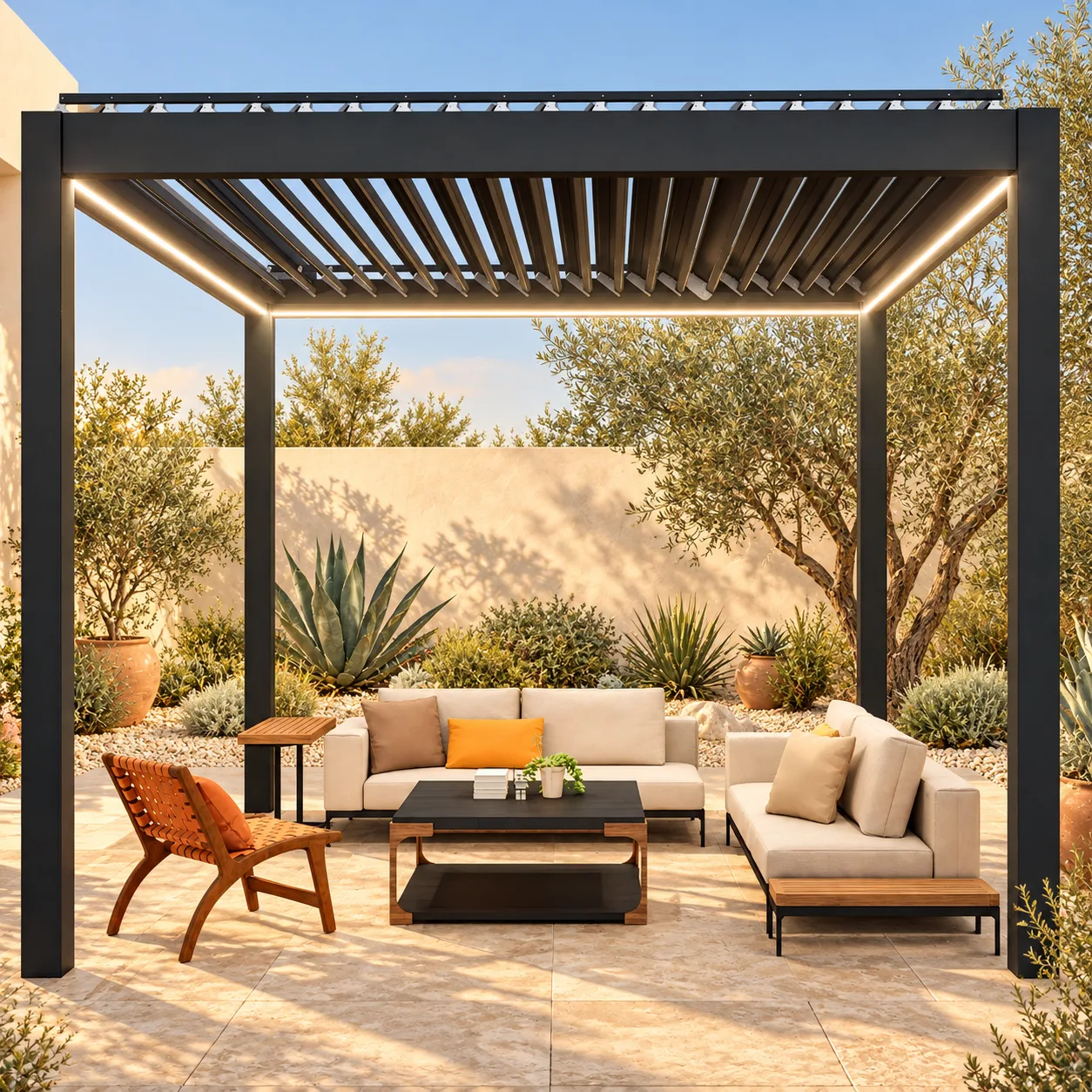
Sometimes a patio cover and a solar array can be designed as one project, but never assume a standard pergola is suitable for photovoltaic panels. Before buying or attaching anything, get written confirmation for the exact structure and proposed array from the manufacturer, a qualified solar installer, and—where needed—a structural professional. A louvered pergola is not automatically a solar-panel mounting system.
The U.S. Department of Energy says PV arrays need a stable, durable mounting structure that can support the array and withstand relevant weather exposure. That is general solar guidance, not a rating or approval for any META LIFESTYLE pergola. Treat panel weight, wind effects, attachment details, electrical routing, drainage, and permitting as a coordinated design review—not a do-it-yourself add-on.
Start with the exact pergola model and its documents
First identify the product model, dimensions, finish, configuration, and any motorized or adjustable roof components you are considering. Then ask for the current model-specific documentation. The key question is not whether a panel can physically sit above a frame; it is whether the manufacturer has documented the structure and approved connection method for the loads and use you propose.
Request the available product drawings, installation instructions, permitted mounting locations, and any stated structural limitations. Ask whether those documents explicitly cover photovoltaic panels, racking, or other concentrated attachments. If they do not, do not infer approval from a photo, a broad load statement, or the fact that another canopy somewhere carries solar modules. Different frames, connections, foundations, panel arrangements, and locations can produce different design conditions.
Be especially careful with adjustable louvers. A roof made of moving blades has operating parts and clearances that a fixed canopy does not. Do not drill into, clamp onto, or obstruct louvers, motors, gutters, or electrical components unless model-specific instructions explicitly authorize the proposed installation. Ask whether panels would interfere with movement, service access, drainage, or the ability to use the pergola as intended.
Have the solar and structure teams review the same plan
Bring the pergola manufacturer and solar professional into the conversation before the order is final. Share a dimensioned site plan, the proposed panel layout, the array and racking information, the intended attachment points, and the installation location. Ask the solar installer to describe the system weight and how it transfers into the supporting structure and foundations. A qualified structural professional can assess whether the exact structure and site are suitable for the proposed loads and attachment scheme.
DOE’s consumer solar guide recommends involving a qualified installer and notes that a solar installer, roofing expert, or structural engineer can help assess a roof’s solar suitability. A pergola is not a roof, so that source does not approve a pergola installation; it illustrates why the support structure should be evaluated by the appropriate professionals rather than guessed from appearance.
For a project-specific decision, model-specific documentation and qualified local professionals or authorities control. This is particularly important for structure, anchoring, wind, snow, electrical work, drainage, clearances, and permits. Requirements vary with the product and site, and this article does not establish any structural rating, code requirement, or installation approval.
Questions that belong on the review checklist
- Loads and load path: What are the panel, racking, wiring, and related equipment weights, and how will those loads transfer through the beams, posts, connections, and foundations?
- Wind and weather: Has the complete assembly been assessed for the site’s exposure and applicable local design conditions? Do not transfer a rating from another product or configuration.
- Connections: Are mounting points and fasteners explicitly approved for this model and material? Who is responsible for details that are not in the pergola instructions?
- Louvers and service: Will the array interfere with louver travel, motor access, cleaning, inspection, or replacement? Confirm the answer for the exact model and panel arrangement.
- Water management: Where will rainwater go, and could panels or wiring change drainage or direct water onto a walking area? Ask the manufacturer and installer to show the proposed path.
- Electrical routing: How will conductors be protected and routed without unapproved drilling, sharp bends, pinch points, or conflicts with moving parts? Have electrical work reviewed and performed by qualified professionals.
- Approvals: Which permits, inspections, utility coordination, and project approvals apply at this address, and who will obtain them? Confirm with the local authority and installer.
- Warranty and responsibility: Would the proposed attachment affect product coverage? Which contractor is responsible for the pergola, racking, penetrations, wiring, and any resulting repair?
Ask for the answers in writing and have the participating teams review the same drawing. If one party says “it should be fine” but cannot identify the documents or calculations behind that answer, pause before ordering materials or drilling into the structure.
Compare an integrated design with a separate solar canopy
If the pergola manufacturer does not document the proposed panel installation, a separately engineered solar canopy may be the clearer route. That can mean keeping the pergola for shade and using a purpose-designed structure for the array, or commissioning a custom canopy whose designer coordinates the solar system from the beginning. The right choice depends on the site, desired patio use, solar layout, approvals, and project scope; no one option is automatically less expensive or better.
Compare the alternatives on more than appearance. Ask each team to identify the structure, foundation, panel and racking scope, electrical routing, service access, drainage, inspections, and warranty responsibilities. A single coordinated plan can make interfaces easier to understand, but only if the relevant professionals actually provide and approve those details. Do not count an attractive product image as evidence of compatibility.
If you are still choosing a pergola, decide first whether the main goal is adjustable shade, a defined outdoor room, or a combined shade-and-generation project. If solar generation is essential, begin with the solar layout and structural review rather than choosing a pergola first and attempting to add panels later. Ask about the solar team’s design assumptions before committing to a particular frame, location, or roof configuration.
What to send before requesting a quote
Prepare the site address or general location, patio dimensions, a few photos, the pergola model under consideration, and the proposed panel concept. Include any existing plans that identify the slab or other foundation, nearby walls, electrical equipment, trees, and the route for wiring. Do not make holes or order panels to “test fit” an unapproved attachment.
Ask META LIFESTYLE whether the exact pergola documentation covers the intended solar use and what information the company needs to review the request. Separately ask a qualified solar installer and structural professional to assess the array and site. Local authorities determine applicable permit and inspection steps. If the model documents do not support the idea, ask about a non-integrated alternative rather than attempting to modify the product.
Frequently Asked Questions
Can I mount solar panels directly on motorized pergola louvers?
Do not do so unless the exact model’s written instructions explicitly permit the mounting method and the relevant professionals approve the complete design. Added hardware or panel weight could conflict with movement, service access, or the intended operation; the model documents control.
Does a pergola’s wind rating mean it can carry solar panels?
Not by itself. A rating, if provided, applies to the documented product and conditions. Ask whether the manufacturer’s documents explicitly include the proposed panels, racking, attachments, and configuration; do not extrapolate from a different setup.
Can a solar installer approve the pergola structure?
The solar installer can design and coordinate the PV system, but structural adequacy may require review by a qualified structural professional and confirmation from the pergola manufacturer. Ask each party to state its scope and responsibility in writing.
Will panels change how rain drains from a louvered pergola?
They may affect the water path or access to drainage components, depending on the specific arrangement. Request a drawing that shows panel edges, moving parts, gutters or drainage features, and discharge location. Do not assume a panel layout leaves water management unchanged.
Do I need a permit for solar panels on a backyard pergola?
Permit and inspection requirements depend on the project and local jurisdiction. The installer and local authority should confirm the applicable process for your address; this article cannot determine local code requirements.
Explore pergola options and request a quote
Review the META LIFESTYLE outdoor pergola collection and ask about documentation for the exact model and configuration. If solar panels are part of your plan, include that requirement in your first inquiry rather than treating it as a later accessory.
Request a Quote or contact META LIFESTYLE with your site information and project questions. Both +8619050185756 and +1 (626) 735-5685 are official META LIFESTYLE WhatsApp contacts: WhatsApp +8619050185756 or WhatsApp +1 (626) 735-5685.
For general solar planning, see the U.S. Department of Energy’s Solar Photovoltaic System Design Basics and its consumer guide to going solar.